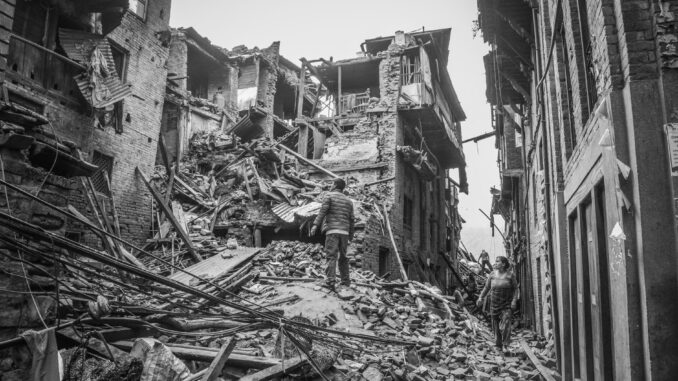
Photo by Sanej Prasad Suwal on Pexels
First light did not bring relief in the Colombian Andes on Tuesday; it brought a tally. Through the night, rescue crews picked at mounds of folded concrete with their hands, crowbars and, where the gaps were wide enough, picks and shovels. Somewhere beneath the rubble, officials acknowledged, the distinction between the dead and the merely yet-to-be-found had become a matter of how quickly the machines could move. At least 180 people were killed by the earthquake that struck the mountain region in recent days, and Tuesday’s aftershocks were a grim reminder that the ground had not finished settling.
The number is unlikely to be the last. Aftershocks rattled the zone throughout the day, sending fresh dust curling out of damaged buildings and forcing teams to stop work, listen and then start again. Survivors spent another sleepless night in parks and open lots, wrapping themselves against the cold and refusing to wander far from the places where their homes used to stand. For the people doing the digging, every hour is a negotiation between hope and physics: a survivor in an air pocket can outlast a deadline, but a collapsing slab does not wait for anyone’s clock.
This is the moment when a disaster stops being a statistic and becomes a squall of individual decisions. A mother insists the sound she heard came from the third floor. A neighbor passes water through a crack. A soldier lowers a microphone into a void and asks everyone to be quiet enough to hear the answer. The official response is coordinated and disciplined, but the raw, improvisational humanity of rescue is what propels these first crucial hours.
Reference Earthquakes in Modern Colombian History
| Event | Year | Approx. Magnitude | Approx. Fatalities | Legacy |
|---|---|---|---|---|
| Popayán, Cauca | 1983 | 5.6 | ~300 | Exposed the vulnerability of old housing stock and public buildings |
| Armenia and the Eje Cafetero | 1999 | 6.2 | >1,000 | Drove the creation of stronger national disaster management structures |
| Páez River Basin, Cauca | 1994 | ~6.8 | ~1,100 | Showed how landslides amplify quake losses in steep river valleys |
| Current event, Colombian Andes | 2026 | Yet to be independently confirmed | 180 and rising | Testing whether lessons learned have actually been enforced in communities |
Leave a Reply