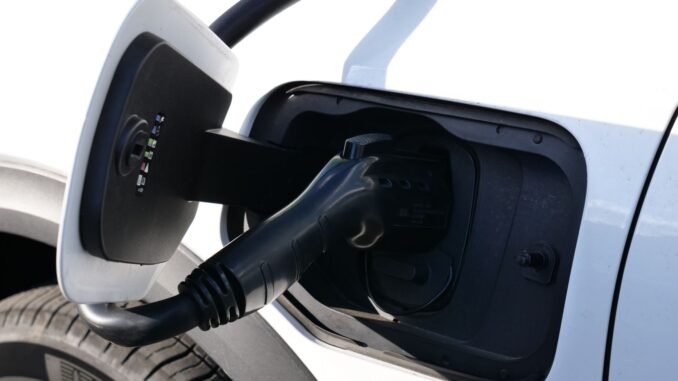
Photo by Giant Asparagus on Pexels
The August Road Test That Exposed a Philosophical Rift
The most consequential fact to emerge from the CNBC road test published Aug. 15, 2026, is not which system drove more smoothly, or which brand logged more disengagements. It is that Tesla’s “Full Self-Driving” and Rivian’s “Autonomy+” are both marketed as hands-free, yet they are built on opposite assumptions about the person behind the wheel.
That is not a minor distinction. In the electric-vehicle market, marketing language is often a zero-sum contest: whichever brand sounds closest to full autonomy tends to win the attention of investors and early adopters. Rivian, a challenger with far fewer vehicles on the road than Tesla, needed a compelling answer to FSD. The Aug. 15 test suggests the company now has one — but it is not the answer that will draw the loudest applause from fans of untethered automation.
Autonomy+ vs. FSD: The Same Phrase, Different Guardrails
On paper, both systems let the driver travel hands-free on compatible stretches of road. In practice, the experience diverges. Rivian’s Autonomy+ feels engineered to make hands-free driving a supervised convenience: useful, but never a reason to lower your guard. The safety guardrails are noticeable the moment attention wanders or the system approaches a situation it does not fully understand. Tesla’s FSD presents itself as a more confident, almost relentless piece of software, willing to push further before asking the human to step back. The distinction is not about who has the smarter neural network — it is about how each company handles the unknown.
Tesla FSD vs. Rivian Autonomy+: Two Approaches to Hands-Free Driving
| Aspect | Tesla FSD | Rivian Autonomy+ |
|---|---|---|
| Core promise | Pushes toward full autonomy | Hands-free capability with defined limits |
| Safety guardrails | Fewer, more permissive | Additional, more enforced |
| Brand philosophy | Software defines the edge | Human remains the center |
| Market positioning | Visionary, beta-culture | Pragmatic, safety-first |
What counts as a guardrail? Driver monitoring that functions as more than an occasional nag. Intervention timing that gives the human a graceful, predictable path back into control. Design choices that keep the system from barreling through ambiguous scenarios. These are not specs a buyer can check in a showroom. They are choices about how a system fails. And for a technology that will inevitably face odd weather, unmarked asphalt, and unpredictable road users, failure behavior is the real product.
The Level 2 Paradox No Marketer Wants to Explain
Here is the context a casual reader could easily miss: despite the word “full” in Tesla’s product name, neither system is autonomous in the regulatory sense. Under the widely used SAE classification, both FSD and Autonomy+ are Level 2 driver-assistance systems, meaning the human driver remains responsible for safe operation at all times, even when hands are off the wheel. Federal safety regulators have made this point repeatedly as driver-assistance marketing has outpaced the underlying legal reality.
That paradox explains the philosophical split. A company that treats Level 2 as a stepping stone to robotaxis will maximize the share of driving the software handles and let the driver manage the unpredictable edges. A company that treats Level 2 as a product in its own right will optimize for boundaries: where the system refuses to engage, how early it requests help, and how well it monitors the human. Rivian’s approach clearly follows the second path. It delivers enough convenience to feel modern, but it keeps enough friction to keep drivers honest.
For the consumer, the practical result is a fork in the road. One system asks you to trust a beta-grade promise and believe the software’s limits will recede with over-the-air updates. The other asks you to trust a set of boundaries that are designed to honor your limits — and to know exactly who is responsible when the margin disappears.
Who Gains, Who Loses, and What the Race Now Proves
The immediate winners are buyers, who now have a genuine choice between two interpretations of hands-free driving. Tesla still owns the brand category; FSD has been a purchase-decision driver for years and an extraordinary data-collection flywheel. Rivian’s much smaller fleet cannot match that real-world feedback loop today. But the guardrails give Rivian a different kind of leverage: credibility with skeptical consumers who want automation without the sense that they are participating in an experiment.
The losers may be the tech-forward narrative itself. If Rivian proves that hands-free convenience does not require compromising on safety architecture, the industry’s habit of shipping half-finished software to alpha customers will face sharper scrutiny. Regulators are watching these systems closely, and a direct comparison showing restraint on one side gives enforcement agencies a concrete reference point. Which company logs more disengagements matters less than which one can convince a liability court that it exercised reasonable care in designing the system.
What This Signals for the Broader Autonomous-Vehicle Industry
The more significant development here is not the two-company comparison. It is what the comparison says about the competitive map. Tesla has long set the agenda: whatever it introduces, rivals feel compelled to mirror. Rivian is doing something rarer — matching a headline feature while rejecting the underlying philosophy. That is a deliberate product bet, and it treats safety not as a constraint but as a strategic asset.
Other automakers will now face a clearer choice. Companies betting on rapid autonomy will continue to stretch the definition of supervised driving. More cautious incumbents — many of which have openly distanced themselves from Tesla’s tactics — have a template they can cite when their own hands-free systems launch. The result may be a market in which “hands-free” does not mean the same thing from one dealership to the next, and in which the safety conversation becomes a point of differentiation rather than a shared feature.
The Real Metric Is Trust, Not Hands-Free Time
If there is one number worth tracking, it is not miles driven hands-free or the length of a demo video. It is the rate at which customers keep the system enabled after the novelty wears off, and the rate at which regulators allow each brand to expand its operating domain. Rivian’s route is slower, but it offers the industry a credible model for honest marketing. Tesla’s route is faster but carries a heavier burden of proof every time software is released into the wild. The auto industry has always been a test of assumptions about human behavior. The autonomous era will be no different, and the companies that understand that first may not have the most futuristic-sounding names — they will simply have the most durable ones.
Editorial Note: This article was produced with AI assistance and reviewed by the Celloraa editorial team for accuracy and clarity. It is intended for informational purposes only. Read our Editorial Policy.
Leave a Reply