Photo by RDNE Stock project on Pexels
When Politics Meets Portfolios: A Costly Intersection
In the polarized political landscape of today, the spillover into personal finance is increasingly evident. Investors often find themselves aligning their portfolios with their political beliefs, a phenomenon that might feel principled but can ultimately prove costly. This intersection of politics and investing raises a central tension: should personal values dictate investment choices, or should financial pragmatism prevail?
The argument for value-driven investing is compelling, particularly when considering the rise of environmental, social, and governance (ESG) criteria. However, political alignment, rather than ethical or sustainable considerations, can introduce unintended biases. For example, a Democrat might shy away from energy stocks traditionally associated with conservative agendas, missing out on potential gains. Conversely, a Republican might avoid tech stocks perceived as liberal, overlooking significant growth opportunities.
This partisan approach to investing doesn’t just limit diversification; it also exposes investors to unnecessary risk. By constraining choices to ideologically compatible sectors, portfolios may suffer from volatility and underperformance compared to more balanced strategies. As the market operates independently of political leanings, the real challenge is to separate personal beliefs from financial decisions.
Historical Precedents: Lessons from Past Market Behaviors
This isn’t the first time political bias has influenced financial markets. During the 2008 financial crisis, for instance, political affiliations colored perceptions of market recovery strategies. Investors who mistrusted government interventions based on political beliefs often missed out on the market rebound that followed measures like the Troubled Asset Relief Program (TARP).
Similarly, in the 2000s, the tech bubble burst saw significant political rhetoric around deregulation and taxation impacting investor sentiment. Those who allowed political discourse to cloud their judgment often found themselves on the sidelines as tech stocks eventually surged.
These historical examples underscore a critical lesson: the market’s trajectory often defies political expectations. By recognizing patterns from the past, investors can better understand the pitfalls of letting political bias steer their investment decisions.
The Economic Ripple Effect: Beyond Individual Portfolios
The broader economic implications of politically biased investing extend beyond individual portfolios. When large groups of investors make decisions based on political beliefs rather than economic fundamentals, market distortions can occur. This behavior can lead to inflated valuations in politically popular sectors and undervaluation in others, creating inefficiencies.
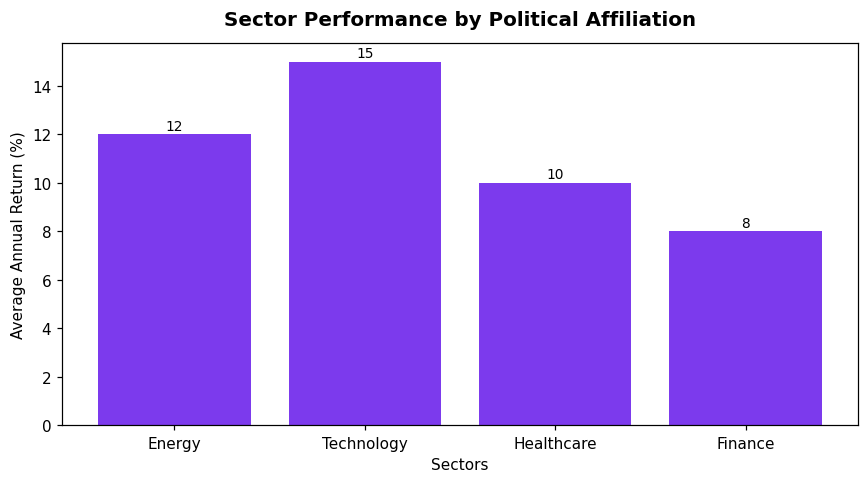
Moreover, such biases can exacerbate market volatility. When political events cause sudden shifts in investor sentiment, sectors tied to particular political ideologies might experience rapid capital inflows or outflows. This herd mentality amplifies market swings, complicating the landscape for investors seeking stable returns.
For ordinary people, these dynamics can translate into higher costs of living and unpredictable retirement savings growth. When markets are driven by political sentiment, rather than balanced economic indicators, the financial security of everyday investors is at risk.
Engagement Across Divides: A Path to Better Investing
One potential remedy to the pitfalls of politically biased investing is fostering dialogue across political divides. Engaging with opposing viewpoints can broaden an investor’s perspective, exposing them to diverse sectors and investment opportunities they might otherwise overlook.
By actively seeking out discussions with those who hold different political beliefs, investors can challenge their own biases and assumptions. This broader understanding can lead to more balanced portfolios, reducing risk and enhancing long-term returns. Investors might find value in sectors they previously dismissed, leading to more robust and diversified holdings.
Such engagement can also encourage critical thinking about the motivations behind investment choices. By focusing on economic fundamentals rather than political affiliations, investors can make more informed decisions that align with their financial goals rather than transient political trends.
What Analysts Are Watching
As the interplay between politics and investing continues to evolve, analysts are keeping a close eye on several key factors. Market reactions to upcoming elections, regulatory changes, and international relations are all areas where political bias could manifest in investment strategies.
Analysts are particularly interested in how major policy shifts, like those related to climate change or healthcare, will influence investor sentiment. The potential for political bias to skew investment strategies remains a concern, particularly if it leads to market inefficiencies or increased volatility.
Going forward, the challenge for investors will be to discern between genuine economic opportunities and decisions clouded by political bias. By focusing on long-term trends and engaging across political lines, investors can better navigate the complexities of a market increasingly influenced by political dynamics.
Editorial Note: This article was produced with AI assistance and reviewed by the Celloraa editorial team for accuracy and clarity. It is intended for informational purposes only.
Read our Editorial Policy.
Leave a Reply