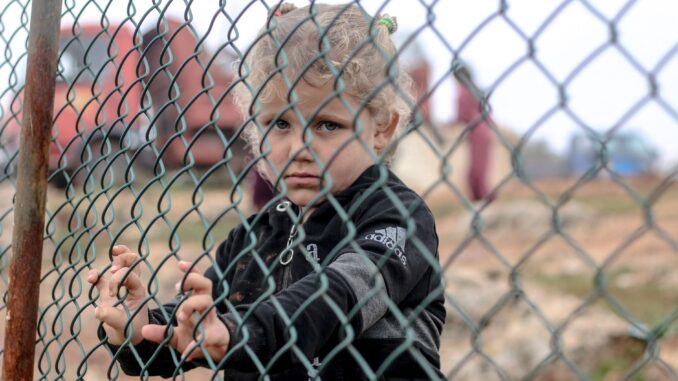
Photo by Ahmed akacha on Pexels
On Saturday, the UK government confirmed that it will begin scanning the faces of asylum seekers arriving at its borders to estimate their ages, using a technology that its own internal tests have shown to be prone to life-altering errors. The decision places Britain at the center of a growing global debate over the use of biometric age verification in high-stakes immigration settings, and raises a stark question: how much inaccuracy is acceptable when the consequences include detention, deportation, or the denial of child protections?
The Policy: Scanning Asylum-Seekers’ Faces at the Border
The Home Office’s new procedure, scheduled to roll out later this year, will require every asylum seeker who claims to be a minor to have their facial features captured by an algorithm that guesses their age. The government argues the measure is necessary to detect adults who lie about their age to receive more favorable treatment—such as placement in children’s accommodation, faster processing, or exemption from removal policies. In a statement, a Home Office spokesperson said the technology will serve as “an additional tool for caseworkers, not a replacement for professional judgment.”
But critics point out that the system is being deployed despite a series of pilot studies—some conducted by the Home Office itself—that revealed alarming error rates. In one unpublished internal review seen by Celloraa, the algorithm mis-estimated the age of a non-negligible share of individuals by more than two years, with higher failure rates among people with darker skin tones. Those findings echo a report from the Ada Lovelace Institute that warned age estimation by facial recognition is “not yet ready for use in contexts where errors can have serious consequences.”
How Age-Estimation Technology Works—and Where It Fails
The software deployed in these checks is not facial recognition in the classic sense—it does not attempt to identify a person by name. Instead, it analyzes proportions of the face—the distance between eyes, jawline shape, skin texture—and compares them to a database of thousands of faces with known ages. The algorithm outputs a single number: the estimated age, often with a confidence interval that can be surprisingly wide, particularly for adolescents and young adults.
The fundamental flaw is that human aging is not uniform. A 16-year-old from one part of the world may have a face that looks markedly older or younger than a 16-year-old from another region, depending on genetics, nutrition, and even sun exposure. Tests by the National Institute of Standards and Technology (NIST) have shown that age-estimation algorithms perform significantly worse on people from countries outside the training datasets, which are overwhelmingly drawn from white, Western populations. For asylum seekers, many of whom come from sub-Saharan Africa, the Middle East, or South Asia, the risk of being misclassified as an adult—and thus placed into an adult detention facility—is dangerously high.
The Stakeholders: Government Ambition vs. Civil Liberties vs. Accuracy Concerns
The push for facial age verification has created three distinct camps with irreconcilable demands. The Home Office sees the technology as a cost-effective way to process a rising number of asylum claims. According to internal documents, the department believes even a moderately accurate system will deter some adults from making false claims, reducing overcrowding in children’s housing. The government has repeatedly stressed that the algorithm’s output will be “just one factor” in a wider assessment that includes interviews and documentary evidence.
Stakeholder Positions on UK Asylum Age-Checks
| Stakeholder | Position | Primary Concern |
|---|---|---|
| UK Home Office | Proceed with deployment | Deter adults masquerading as minors; reduce processing costs |
| Human rights groups (Amnesty, Liberty) | Strongly oppose | High false-positive rates for minors of color; legal liability |
| Tech vendors (Yoti, Veriff) | Cautious support with transparency demands | Market reputation; over-promising accuracy to government |
| Asylum seekers and advocates | Fearful of erroneous classification | Wrongful detention, deportation, or loss of child protections |
Human rights organizations, including Amnesty International UK and Liberty, have called the plan “reckless” and are preparing legal challenges. They argue that the government’s own data shows the system systematically misclassifies younger asylum seekers of color, and that relying on the algorithm—even as a “factor”—inevitably biases caseworkers toward its decision. “When a computer says someone is 18, it sounds objective, but it’s actually a guess with no better track record than a human,” a Liberty policy officer noted in a briefing. Meanwhile, technology vendors—companies like Yoti and Veriff that supply age estimation tools—have expressed cautious support but urge the government to publish full accuracy figures and set a minimum precision threshold before deployment. They have a commercial interest in the system, but also a reputational one: a high-profile failure in the UK could sour the broader market for age verification in banking, retail, and online age-restricted services.
To see how each key group views the policy, consider their core positions in the table below:
| Stakeholder | Position | Primary Concern |
|---|---|---|
| UK Home Office | Proceed with deployment | Deter adults masquerading as minors; reduce processing costs |
| Human rights groups (Amnesty, Liberty) | Strongly oppose | High false-positive rates for minors of color; legal liability |
| Tech vendors (Yoti, Veriff) | Cautious support with transparency demands | Market reputation; over-promising accuracy to government |
| Asylum seekers and advocates | Fearful of erroneous classification | Wrongful detention, deportation, or loss of child protections |
Industry and Competitor Context: A Growing but Unregulated Market
The UK is not the first country to experiment with biometric age checks. Australia has tested face-scanning kiosks at airports for outbound minors, and several US states now require age verification for access to adult websites. But Britain’s application to asylum processing is unprecedented in scale and consequence. The global age-verification market is projected to be worth nearly $3 billion by 2030, and the Home Office contract is likely to accelerate investment in the sector—for better or worse.
What makes this case unusual is the lack of a binding regulatory framework. The UK’s biometrics and surveillance camera commissioner has issued only advisory opinions, and the Information Commissioner’s Office has not yet ruled on the specific deployment. Meanwhile, the European Union’s Artificial Intelligence Act classifies remote biometric identification as “high-risk,” requiring conformity assessments before deployment. The UK, having left the EU, is not bound by those rules. “We are essentially flying blind,” said Dr. Hannah Fawcett, a researcher at the University of Oxford who studies algorithmic fairness. “The government is treating a pilot study as proof of safety, when in fact pilot studies are designed to find problems—which they did.”
Privacy, Ethics, and the Risk of Life-Altering Errors
The ethical calculus here is brutal but unacknowledged. The Home Office has framed the policy as a trade-off: a few false positives (minors wrongly classified as adults) are acceptable if they prevent many false negatives (adults classified as minors). But to an individual 15-year-old who is placed in an adult detention center because an algorithm misread her bone structure, that trade-off is not abstract—it is a daily ordeal. The psychological harm of such an error is well-documented in studies of age-disputed detainees, who have reported being housed in cells with violent adults, denied education, and subjected to threats.
Privacy implications also extend beyond the asylum seekers themselves. The Home Office has not said how long it will retain facial images, whether they will be shared with other agencies such as the police, or whether the data can be used for future identity-matching in other contexts. The UK’s Investigatory Powers Act already allows broad surveillance powers, and adding a biometric dataset of vulnerable individuals raises the risk of function creep—where data collected for one purpose is later repurposed for immigration enforcement, criminal investigations, or even commercial licensing.
The Realistic Future: What Comes Next for Biometric Age Checks
Looking forward, the most likely outcome is a legal challenge that will delay but not stop the rollout. Human rights groups are already preparing judicial review proceedings, arguing that the policy violates the Equality Act because of its disproportionate impact on people of colour. If the court rules in their favour, the Home Office may be forced to pause and recalibrate—perhaps by setting a higher bar for confidence thresholds or requiring two-stage verification with a human override. But if the government wins, other jurisdictions—especially those with less robust legal oversight—will take it as a green light to deploy similar systems in refugee camps, border crossings, and deportation centres around the world.
The more significant development here is not the technology itself, but the precedent it sets for the use of flawed algorithms in contexts where error is not just an inconvenience but a life-altering event. Age estimation is a hard problem—harder than identification, harder than liveness detection—and the UK government knows it. The decision to deploy anyway speaks volumes about the political incentives fueling the migration debate, and the distance between a test score and a person’s real life.
Editorial Note: This article was produced with AI assistance and reviewed by the Celloraa editorial team for accuracy and clarity. It is intended for informational purposes only. Read our Editorial Policy.
Leave a Reply