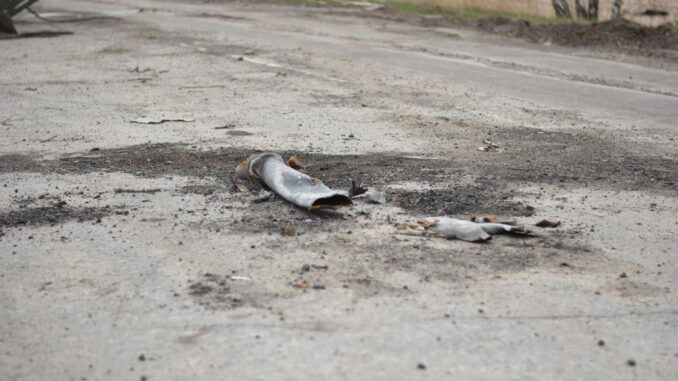
Photo by Serhii Bondarchuk on Pexels
The relative calm that has cloaked central Damascus since the government reclaimed full control of the capital in 2018 shattered on Thursday afternoon when a bomb detonated in a cafe adjacent to the Palace of Justice, killing at least six people. The blast, reported by Syrian state media, strikes at a symbol of regime stability — a busy judicial heart where lawyers, litigants and officials gather daily — and raises immediate questions about the resilience of President Bashar al-Assad’s security apparatus. That no group immediately claimed responsibility only deepens the ambiguity surrounding an attack that, on the surface, appears calculated to send a message far beyond the smoking cafe tables.
The Palace of Justice is not merely a government building; it is the epicentre of Syria’s legal system, housing the Court of Cassation and the State Security Court. Targeting such a site, at a time of day when it is crowded, suggests either a precise strike against a specific individual or a broader psychological operation aimed at exposing vulnerability in the capital’s security cordon. The competing interests at play are stark: the Assad regime needs to project control to maintain legitimacy and attract reconstruction aid; its adversaries, both internal and external, benefit from reminding the world that Syria remains a battlefield, even if the front lines have frozen.
The Security Paradox in Assad’s Damascus
To the casual observer, Damascus has reverted to a semblance of peacetime normality since the government, backed by Russian air power and Iranian ground forces, regained the Eastern Ghouta suburbs and crushed the last opposition holdouts in the capital’s outskirts. Checkpoints are numerous, identity checks routine, and the mukhabarat — Syria’s sprawling intelligence network — maintains a heavy footprint. Yet Thursday’s bombing reveals a paradox: the very density of checkpoints can create predictable bottlenecks and gathering points that remain vulnerable to improvised explosive devices (IEDs) placed in public spaces.
Underlying this vulnerability is the fact that Syria’s conflict was never fully extinguished. It metastasised. The regime exercises rough control over the populated west, but the north and east remain contested by a patchwork of actors: Turkish-backed factions, the Kurdish-led Syrian Democratic Forces (SDF), and rump elements of Islamic State (ISIS). Even within government-held areas, sleeper cells from various opposition groups — some affiliated with Hay’at Tahrir al-Sham (HTS), others with ISIS — have periodically carried out targeted killings and bombings. The mechanism that casual readers miss is that the absence of full-scale civil war does not equal peace; it equals a violent stalemate where each side probes the other’s defences through assassinations, bombings and drone strikes, avoiding conventional combat to preserve their gains.
Who Stands to Gain? The Problem of the Unclaimed Attack
The fact that no group immediately claimed responsibility is itself a telling data point. In the Syrian landscape, claims of responsibility serve a strategic purpose: they signal operational capability, boost morale among supporters, and deter defectors. An unclaimed bombing can indicate several things: the perpetrator may be a small cell acting without authorisation from a parent organisation; the attack may have been designed to avoid scrutiny by revealing the hand behind it; or it could be a ‘false flag’ operation intended to implicate a rival faction. The most common pattern in recent years, however, is that ISIS has sometimes withheld claims when an operation kills civilians, while Salafi-jihadist groups like HTS claim strikes against regime targets immediately.
The more significant development here is the location: near the Palace of Justice. This is not a military barracks or a checkpoint; it is a civilian administrative hub. Targeting it suggests the perpetrator is uninterested in direct military confrontation and instead wants to erode public confidence in the regime’s ability to provide basic security. For the Assad government, which has staked its post-war legitimacy on the restoration of order, such a blow at a judicial site is particularly damaging. It undermines the narrative that the war is over and that citizens can resume normal life — a narrative essential for attracting foreign investment and encouraging refugees to return from Lebanon, Jordan and Europe.
A History of Urban Bombings in Syria’s War
Thursday’s attack does not occur in a vacuum. Since 2011, Damascus has been the target of dozens of large-scale bombings. In 2012, a suicide attack near the Palace of Justice killed dozens. In 2016, the Sayyidah Zaynab shrine area was hit repeatedly. The current attack echoes those earlier waves but in a starkly different strategic environment. During the peak of the civil war, bombings were part of a concerted insurgency seeking to overthrow the regime. Today, with the conventional war largely settled in Assad’s favour, such attacks are more akin to a guerrilla rearguard action — designed to disrupt, not to conquer.
Historical precedent from Iraq and Lebanon suggests that unclaimed bombings in a post-conflict setting often recur as part of a long tail of violence. The US experience in Iraq after the 2007 surge, and the ongoing instability in Lebanon after the Civil War, show that de-escalation from full-scale war to sporadic urban bombing is difficult to reverse. What makes the Syrian case distinct is the density of external actors with competing interests. Iran, Russia, Turkey, the United States and Israel all maintain military assets inside the country, and any attack risks sparking a wider confrontation if it is linked to one of these powers. The fact that the attack happened near a government building that also houses offices dealing with foreign nationals adds an additional layer of sensitivity.
Regional Implications and the Stalled Peace Process
The bombing comes at a delicate moment for Syria’s reintegration into the Arab League, a process championed by Saudi Arabia and the United Arab Emirates since 2023 but met with deep scepticism by Western nations. The attack will likely reinforce the sceptics’ argument that Assad’s government neither controls its territory nor deserves normalisation without a credible political transition. On the other hand, the bombing provides the regime with a ready-made propaganda tool to argue that terrorism remains a threat requiring strong central authority — exactly the kind of argument Assad uses to justify his continued grip on power and to solicit Russian and Iranian security assistance.
For neighbouring countries, the attack is a reminder that Syria’s instability has not been containerised. Jordan has already tightened border security. Turkey, preoccupied with its own operations against Kurdish forces in northern Syria, watches Damascus with wariness. Israel, which has carried out hundreds of strikes against Iranian-linked targets in Syria, may see the bombing as further evidence of the fragilty of the regime’s hold on the capital. The more significant global implication is the effect on the United Nations-led political process, which has been in suspended animation since the failure of the Constitutional Committee talks in 2022. Any uptick in violence in Damascus reduces the already slim chances of reconvening meaningful negotiations.
What Informed Observers Should Watch Next
The immediate variable is how the regime responds. If it conducts mass arrests in the neighbourhood or escalates shelling in opposition-held Idlib, that will signal a decision to retaliate with force. If it remains relatively restrained, the attack may be handled internally with quiet security reforms. The second variable is whether a claim of responsibility emerges in the coming days, and from whom. A claim from ISIS would affirm that the group retains an operational network in Damascus despite years of counter-terrorism efforts. A claim from an HTS-linked group would be more worrying, as it would indicate that the largest rebel faction is shifting from its northern stronghold back toward the capital.
Equally important to watch is the reaction of the Syrian judiciary. The Palace of Justice is not merely a bureaucratic address; it is where the regime processes political opponents through a deeply flawed legal system. Any disruption to its function could accelerate internal power struggles within the security establishment, particularly between the Regular Forces and the elite units controlled by Assad’s brother Maher. In the longer term, what matters is whether this attack is an isolated incident or the beginning of a new campaign of urban bombing. Syria’s frozen conflict has a habit of cracking open without warning, and a cafe near a courthouse on a Thursday afternoon is as plausible a trigger as any.
Editorial Note: This article was produced with AI assistance and reviewed by the Celloraa editorial team for accuracy and clarity. It is intended for informational purposes only. Read our Editorial Policy.
Leave a Reply