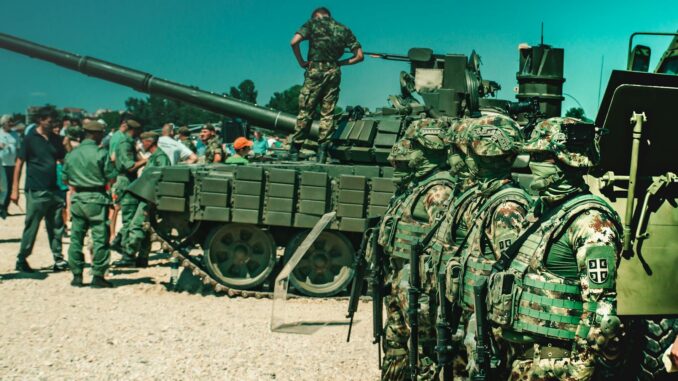
Photo by Bojan Milic on Pexels
A Fragile Opening: The Diplomatic Push to Reopen the Strait of Hormuz
Diplomatic efforts surrounding a potential deal with Iran have intensified in recent days, with reports indicating that a framework agreement could be announced as early as Monday, May 25, 2026. At its core, the emerging deal is reported to include a 60-day ceasefire extension that would facilitate the reopening of the Strait of Hormuz — a narrow but strategically vital waterway connecting the Persian Gulf to the wider global oil market. The talks follow months of heightened tensions in the region, including a series of tit-for-tat naval incidents and restrictions on commercial shipping that have rattled energy markets.
The negotiations are taking place under the shadow of a long history of failed diplomatic overtures between the United States and Iran. The 2015 Joint Comprehensive Plan of Action (JCPOA) was effectively dismantled after the U.S. withdrawal in 2018, leading to a spiral of sanctions, Iranian nuclear advancements, and proxy confrontations. The current talks — reportedly mediated through Swiss and Omani channels — represent the most serious attempt to de-escalate since the 2023–2024 period. The potential inclusion of a 60-day ceasefire is notable because it implies a temporary halt to hostilities that have included not only naval confrontations but also attacks on energy infrastructure in the wider Middle East.
Why the Strait of Hormuz Remains the World’s Most Critical Energy Chokepoint
The Strait of Hormuz connects the Persian Gulf to the Gulf of Oman and the Arabian Sea, and according to the U.S. Energy Information Administration (EIA), approximately 20% of the world’s petroleum — and nearly one-third of all seaborne-traded crude — passes through this 21-mile-wide channel. Any disruption to this flow has immediate, cascading effects on global oil prices, shipping insurance premiums, and the energy security of importing nations from Japan to the Netherlands. Historical precedent underscores the danger: during the Iran-Iraq War’s “Tanker War” in the 1980s, attacks on shipping caused oil prices to spike and forced naval powers to escort tankers through the strait.
More recently, in 2019, a series of mine attacks and drone strikes on tankers near the strait caused a sharp but temporary rise in Brent crude prices. The current situation is more severe: for the past several months, Iran has effectively placed a de facto blockade on the strait, allowing only limited traffic under strict Iranian inspection regimes. This has reduced global oil supply by an estimated 2–3 million barrels per day, according to independent analysts, contributing to sustained price levels above $90 per barrel. A ceasefire that restores normal transit would bring immediate relief to consumers and refiners, but the exact terms of reopening — including whether Iranian naval vessels will withdraw or merely stand down — remain unclear. For further reading on how similar regional disruptions have affected specific markets, see our related coverage on Ukraine’s Targeting of Crimea Oil Sparks Regional Fuel Crisis, which illustrates how chokepoint conflicts in separate theaters can create parallel pricing pressures.
Stakeholder Reactions: From Capitol Hill to Tehran
U.S. Senator Marco Rubio has described the potential deal as “solid,” offering a cautiously optimistic tone that reflects the delicate balancing act facing American policymakers. Rubio, a senior member of the Senate Foreign Relations Committee, has traditionally taken a hard line on Iran, so his endorsement — albeit provisional — signals that the deal may contain enforceable verification mechanisms or snapback provisions that address long-standing congressional concerns about Iranian compliance. Other lawmakers on both sides of the aisle have been more reserved, demanding text-based assurances that the ceasefire will not merely give Iran a breathing spell to rearm or reconfigure its proxy forces.
From Tehran, the signals are mixed. While the Iranian government has not officially commented, state-aligned media outlets have hinted at a willingness to negotiate in exchange for relief from crippling economic sanctions. However, hardline factions within the Iranian Revolutionary Guard Corps (IRGC) view any reopening of the strait as a concession that weakens their leverage. The internal debate in Iran is complicated by the country’s own economic pressures: inflation remains above 40%, and the loss of oil revenue from the restricted strait has hit the budget hard. The 60-day timeline suggests both sides are testing each other’s credibility — a pause long enough to de-escalate but short enough to avoid locking in a long-term arrangement that could be politically costly at home. For deeper context on how U.S.-Iran interactions have evolved through Swiss backchannels, read our earlier report: US-Iran Tensions Flare Amid Swiss Negotiations: Key Stakeholders at Odds.
Market Mechanics: What a Deal Would Mean for Oil Prices and Volatility
If the ceasefire holds and the Strait of Hormuz reopens, the immediate market reaction will likely be a sharp decline in crude oil futures — potentially by $5–10 per barrel — as traders price in the return of millions of barrels of supply. However, the effect may be muted if the reopening is phased or if lingering uncertainty remains about the broader geopolitical context. Options markets are already pricing in elevated volatility for the days following the expected Monday announcement, suggesting that hedge funds and institutional investors are positioning for a binary outcome: either a clean breakthrough or a breakdown that could trigger a renewed spike.
Beyond the immediate price move, the real economic significance lies in supply chain recalibration. Refiners in Asia and Europe that have been paying premium spot prices for alternative crude from the Atlantic Basin — including from the U.S. Gulf Coast and West Africa — will have to adjust their procurement strategies. Shipping routes and insurance rates for tankers serving the Persian Gulf will also shift. A stable strait reduces shipping risk premiums, which in turn lowers the effective cost of delivered crude. For consumers, the passthrough to gasoline prices may take several weeks, but the direction is clearly downward if the deal holds. Conversely, if negotiations collapse, the current precarious equilibrium could give way to more aggressive Iranian tactics — including potential targeting of tankers — reminiscent of the tensions that led to the flare-up in U.S.-Iran confrontations earlier this year.
What to Watch: Key Indicators and Decision Points
As Monday approaches, markets will scrutinize several tangible signals beyond the official statement. First, the exact language of the ceasefire — does it include a complete cessation of hostile naval patrols, or merely a reduction? Second, any mention of Iranian compliance with inspection regimes — if the deal requires international maritime observers to verify strait access, that will boost credibility. Third, the reaction of Gulf states like Saudi Arabia and the United Arab Emirates: both are directly affected by strait disruptions and have historically viewed any U.S.-Iran deal with suspicion unless their own security concerns are addressed. Fourth, the position of the International Atomic Energy Agency (IAEA) — while the deal is framed as a maritime ceasefire, any parallel nod to Iranian nuclear oversight could tie the two issues together in future negotiations.
Additionally, tanker tracking data from services like Vortexa or Kpler will provide real-time verification of traffic changes. If tankers begin lining up at the strait’s entrance within days of the announcement, it will signal genuine reopening. If Iranian-escorted ships continue to dominate traffic, the market may remain skeptical. Finally, any statements from Iran’s Supreme Leader — who holds ultimate authority over foreign policy — will carry far more weight than those from the civilian government. Investors should be prepared for headline-driven volatility not just on Monday but for several sessions afterward as the details sink in.
Broader Implications: Geopolitical Stability and Energy Transition
A successful reopening of the Strait of Hormuz would represent more than a localized diplomatic achievement — it would remove a major risk factor that has been skewing global energy markets for most of 2026. Lower oil prices reduce inflationary pressures in advanced economies and ease the burden on developing countries that import energy. That, in turn, could give central banks more room to pause or reverse interest rate hikes, with positive spillovers for global growth. From an energy transition perspective, stable and relatively low oil prices may paradoxically slow investment in renewables and efficiency, as cheaper fossil fuels reduce the economic incentive for substitution. Policymakers will need to watch this dynamic carefully.
Yet the fragility of the deal remains its defining feature. Ceasefires in regions of deep mistrust often break down, and a 60-day window is short enough to be destabilizing — as the end approaches, both sides may resume brinkmanship. The possibility remains that Iran uses the period to extract further concessions, or that hardline elements provoke a new incident to sabotage the agreement. The competitive dynamics between regional powers — notably the ongoing tensions between Israel and Iran-backed groups, as well as the situation in Gaza (see our analysis of shifting Israeli targeting policies) — add further layers of unpredictability. For now, the most likely path is a cautious implementation of the ceasefire, followed by intensive backchannel talks to extend it. The next week will be critical in determining whether this potential deal reshapes oil markets for the rest of the year or becomes another footnote in the long history of failed U.S.-Iran negotiations.
Editorial Note: This article was produced with AI assistance and reviewed by the Celloraa editorial team for accuracy and clarity. It is intended for informational purposes only. Read our Editorial Policy.
Leave a Reply