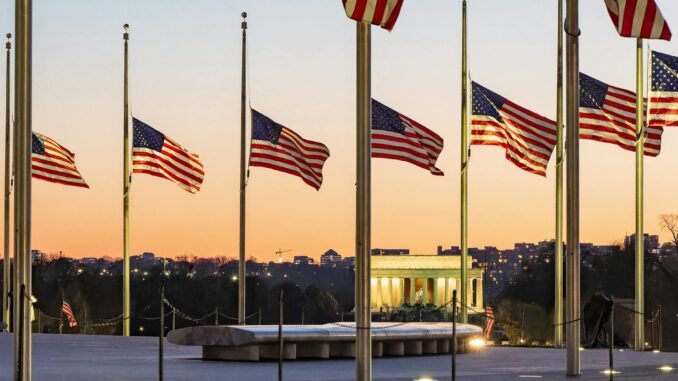
Photo by David Dibert on Pexels
The Evolution of Memorial Day: From Decoration Day to National Observance
Memorial Day, observed on the last Monday of May, traces its roots to the years immediately following the Civil War. Originally known as Decoration Day, it emerged as a grassroots tradition in which communities—both North and South—gathered to decorate the graves of fallen soldiers with flowers, flags, and personal mementos. By the early 20th century, the observance had expanded to honor all American service members who died in military conflicts, and in 1971, Congress declared it a national holiday. This historical arc from local remembrance to unified national ritual underscores a fundamental aspect of American identity: the belief that sacrifice for the nation deserves perpetual public recognition. The evolution also reflects a deeper societal need to collectively process grief and reinforce the values of duty and honor that military service represents. Today’s ceremonies, while varied in scale and style, are direct descendants of those early community gatherings, carrying forward a legacy that bridges generations and political divides.
The shift from Decoration Day to a three-day weekend has not been without controversy. Critics argue that the holiday’s commercial trappings—sales, barbecues, and beach trips—risk overshadowing its solemn purpose. Yet many communities actively resist this drift by centering their observances on acts of genuine reflection. Understanding this tension between leisure and remembrance is essential to grasping how Memorial Day functions as a mirror of national values: it reveals both a desire to honor the fallen and a struggle to maintain sacred space in a culture that prizes productivity and recreation. This duality is not a weakness but a feature of American life, and the ceremonies that persist are deliberate counterweights to the holiday’s more commercial dimensions.
Rituals of Remembrance: Wreath-Laying and the Language of Loss
The wreath-laying ceremony stands as one of the most visually and emotionally potent Memorial Day traditions. Whether at the Tomb of the Unknown Soldier in Arlington National Cemetery or at a modest stone monument in a small town square, the placement of a wreath is an act laden with symbolism. The circle of evergreens represents eternity, the absence of a break symbolizes unbroken memory, and the deliberate, slow pace of the gesture forces participants to pause and absorb the weight of the moment. Local officials, veterans, Gold Star families, and schoolchildren often take part, each laying a wreath as an individual promise to remember. These rituals do more than honor the dead—they educate the living. They teach young Americans that liberty is purchased at a human cost, and that gratitude must be enacted, not merely felt.
Cities and towns across the country personalize the wreath-laying tradition in ways that reflect their own histories. In coastal communities, ceremonies may incorporate wreaths tossed into the sea to honor sailors and Marines lost at sea. In rural areas, wreaths might be placed at Civil War-era graves that still hold local significance. This local variation enriches the national narrative, showing that while Memorial Day is a federal holiday, its meaning is deeply embedded in specific places and faces. The act of laying a wreath is therefore not a rote gesture but a living practice that adapts to community identity while maintaining fidelity to the core purpose: to say, without words, that we have not forgotten.
The Sound of Sorrow: Bagpipes, Taps, and Music in Military Memorials
Music has always been integral to military funerals and memorials, and Memorial Day ceremonies are no exception. The haunting wail of bagpipes, the crisp notes of a bugle playing “Taps,” and the distant roll of drums create an auditory landscape that prepares the mind for reflection. Bagpipes, with their Celtic origins, became a staple of American military honors in the 19th and 20th centuries, particularly in police and fire department ceremonies, but also at military memorials due to their poignant, mournful quality. The sound is deliberately unpolished—raw and human—which makes it a fitting accompaniment to the raw grief that remembrance can evoke. Music in this context does not entertain; it transforms space into sanctuary.
“Taps,” in particular, carries a weight of history. Composed during the Civil War by Union General Daniel Butterfield, the 24-note bugle call was originally used to signal lights out. It evolved into a standard element of military funerals and Memorial Day ceremonies. When a lone bugler plays “Taps” at a ceremony, the silence that follows is often the most powerful part of the observance. That silence—broken only by wind or birds—allows attendees to individually process their emotions and thoughts. Many ceremonies also include the playing of the National Anthem or “God Bless America” as a unifying finale, shifting the mood from somber reflection to communal resolve. The careful curation of music in these events demonstrates how sound can shape collective memory and reinforce the emotional stakes of the day.
Salutes and Silence: The Role of Military Protocol in Honoring the Fallen
Military salutes are a precise and time-honored component of Memorial Day observances. A salute is more than a hand gesture; it is a contract of mutual respect between service members and the nation they serve. When active-duty personnel or veterans raise their hands in salute during a ceremony, they are signaling that the fallen remain part of the military family and that their sacrifice is not abstract but personal. The crispness of the uniform, the stillness of the body, and the duration of the salute all convey discipline and reverence. For many civilians, watching a salute is a rare moment of direct connection to military culture—a window into a world where hierarchy and ritual serve a higher purpose.
Beyond salutes, military protocol often includes rifle volleys, the folding and presentation of the American flag to next of kin, and the observance of a moment of silence. The National Moment of Remembrance, established by Congress in 2000, encourages all Americans to pause at 3:00 p.m. local time for one minute of reflection. This collective silence, whether observed at a ceremony or alone, bridges the gap between public ritual and private grief. It transforms Memorial Day from a passive day off into an active act of national solidarity. Military protocol provides the scaffolding for these moments, ensuring they are conducted with the gravity they deserve and reinforcing the message that the nation’s values include discipline, honor, and unwavering gratitude.
Community as Custodian: Local Ceremonies and the Civic Duty of Remembrance
While national ceremonies at Arlington or Gettysburg draw attention, the majority of Memorial Day observances happen in local communities—small towns, suburban parks, urban squares. These events are often organized by American Legion posts, VFW chapters, scouting troops, and school groups. They are not professionally produced; they are grassroots efforts driven by civic duty. This local ownership is crucial because it ensures that remembrance is not delegated to the federal government but remains a responsibility of every citizen. When a grandmother helps a child place a flag on a veteran’s grave, or when a high school band plays a solemn medley, the act of commemoration becomes a living lesson in citizenship.
Community ceremonies also serve as a space for intergenerational connection. Veterans from earlier wars—Korea, Vietnam, Iraq, Afghanistan—stand alongside active-duty personnel and young people who may have no direct military experience. This mingling of generations and perspectives fosters understanding and empathy. It allows stories to be exchanged, names to be spoken aloud, and local history to be preserved. In an age of digital distraction, the physical gathering at a memorial site on a Monday morning is an intentional act of slowing down and paying attention. It reaffirms that some things—gratitude, memory, community—cannot be outsourced to screens. By participating, communities become custodians not only of the holiday’s meaning but of the democratic values that military service protects.
What Memorial Day Means to a Nation: National Values in Action
At its core, Memorial Day is a reflection of national values that many Americans hold dear: sacrifice, unity, gratitude, and the belief that individuals matter to the collective. The ceremonies are not merely acts of nostalgia; they are active assertions of a social contract. In honoring those who gave their lives in service, the nation acknowledges that its freedoms are not free and that the costs of liberty are borne by a relative few. This acknowledgment is itself a value—one that stands in opposition to complacency or indifference. Memorial Day challenges the living to consider what they owe to the dead and to the idea of country.
The observance also serves as a unifying force in a polarized era. Regardless of political affiliation, Americans can agree that the sacrifice of a soldier, sailor, airman, or Marine deserves respect. Memorial Day ceremonies provide a rare moment of collective purpose, where partisan divisions are set aside in favor of a shared identity as a nation that remembers its protectors. This unity is not naive; it is a conscious choice to prioritize what binds us over what divides us. As the nation continues to grapple with debates over military policy, veteran care, and national identity, the simple act of gathering to lay a wreath or listen to “Taps” reminds everyone that some things transcend politics. In this way, Memorial Day ceremonies do not just reflect national values—they actively shape and renew them, ensuring that the legacy of the fallen endures as a moral compass for generations to come.
For those seeking to learn more about the history and proper observance of Memorial Day, History.com offers a comprehensive overview of the holiday’s evolution, including its roots in Decoration Day and the official establishment of the National Moment of Remembrance. Understanding this history deepens appreciation for the rituals we perform and the values they embody.
Editorial Note: This article was produced with AI assistance and reviewed by the Celloraa editorial team for accuracy and clarity. It is intended for informational purposes only.
Read our Editorial Policy.
Leave a Reply