
Photo by Mikhail Nilov on Pexels
The Uncertain Path of Federal Reserve Leadership
As Kevin Warsh prepares for his inaugural meeting as Federal Reserve chair, the financial world is on edge. This moment is more than just a personal milestone for Warsh; it represents a critical juncture in the global economic landscape. The Fed’s policy direction under Warsh’s leadership could significantly influence market dynamics, especially given the current climate of economic uncertainty.
Warsh, known for his counterintuitive stances during his tenure as a Fed governor from 2006 to 2011, is stepping into the role at a time when inflationary pressures and interest rate decisions are top of mind for investors and policymakers alike. His previous criticism of quantitative easing and unconventional monetary policies has led to widespread speculation about his potential agenda as chair. Yet, the lack of clear signals from Warsh has left economists and market participants guessing about the future course of U.S. monetary policy.
Market Movements: Anticipation and Anxiety
In the lead-up to Warsh’s first meeting, the markets have been characterized by volatility. The S&P 500, for instance, saw a 2% drop last week as investors braced for potential shifts in Fed policy. Similarly, bond markets have been jittery, with yields on 10-year Treasury notes rising as traders anticipate possible interest rate hikes.
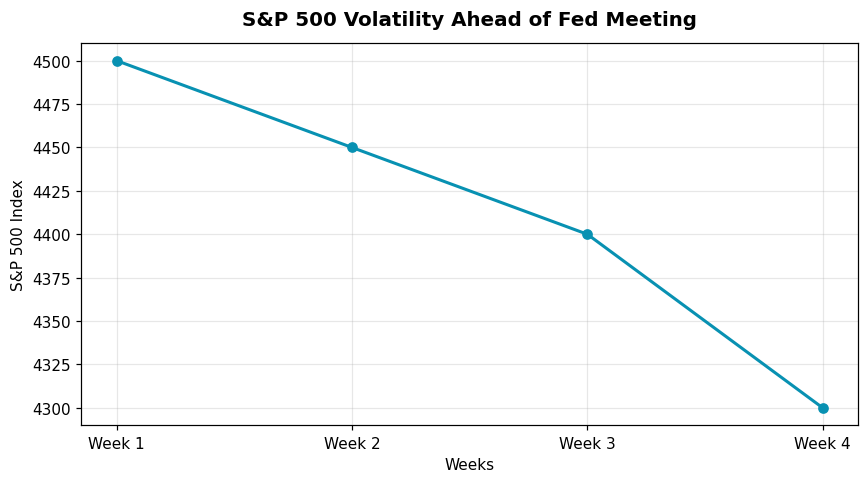
One factor contributing to this uncertainty is Warsh’s ambiguous stance on inflation. While some analysts believe he may pursue a more hawkish policy to combat rising prices, others argue that his approach could be more nuanced, potentially focusing on sustaining economic growth. This ambiguity has made it challenging for markets to price in expectations, leading to heightened volatility.
The Hidden Impacts: Beyond Market Fluctuations
While much attention is focused on the immediate market reactions, the second-order effects of Warsh’s leadership may have far-reaching consequences. For instance, potential shifts in interest rates could affect consumer borrowing costs, impacting everything from mortgage rates to credit card interest. Such changes could alter consumer spending patterns, which are crucial for economic growth.
Moreover, Warsh’s approach to regulation and financial oversight could reshape the banking sector. His past advocacy for less restrictive regulations suggests possible easing of certain financial rules, which could encourage lending and investment but also raise concerns about financial stability.
Economic Context: A Precarious Balancing Act
The broader economic backdrop against which Warsh takes the helm is fraught with challenges. The U.S. economy is grappling with persistent inflation, which has reached levels not seen in decades. At the same time, geopolitical tensions and supply chain disruptions continue to pose risks to economic stability.
In this context, Warsh’s decisions will need to balance the dual mandates of controlling inflation and supporting employment. The delicate nature of this balance means that any misstep could have profound implications, both domestically and internationally. According to a recent Federal Reserve report, maintaining this balance is critical to ensuring long-term economic health.
Implications for Households and Businesses
The concrete effects of Warsh’s policies will inevitably trickle down to ordinary people. For households, changes in interest rates can affect monthly budgets through mortgage payments and other loans. A rise in rates could dampen consumer spending, which has been a key driver of economic recovery post-pandemic.
For businesses, particularly those reliant on borrowing, Warsh’s policies could influence capital investment decisions. Higher interest rates may lead to more cautious investment strategies, potentially slowing down the pace of expansion and innovation in various sectors.
What Analysts Are Watching Next
As economists and market analysts await Warsh’s first press conference as chair, they are keenly observing any signals that might hint at his policy direction. Key indicators to watch include his remarks on inflation targets, interest rate adjustments, and potential regulatory changes.
The more significant development here, however, is not just the immediate market response, but how Warsh’s policy framework will evolve in response to economic conditions. His ability to navigate the complex landscape of global finance and domestic economic challenges will ultimately define his tenure. As such, analysts will be scrutinizing both his words and actions in the coming months to gauge the future trajectory of U.S. monetary policy.
Editorial Note: This article was produced with AI assistance and reviewed by the Celloraa editorial team for accuracy and clarity. It is intended for informational purposes only. Read our Editorial Policy.
Leave a Reply