The Big Picture
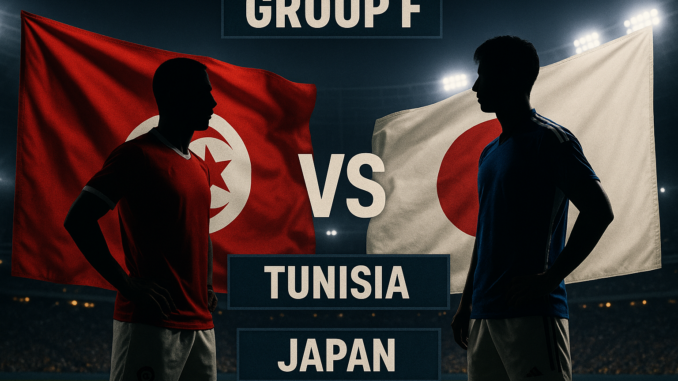
As the World Cup 2026 continues to unfold, Group F presents a captivating matchup between Tunisia and Japan, two teams with contrasting styles and ambitions. This game is pivotal for both sides as they aim to make a significant impact on the global stage. Tunisia, often seen as underdogs, come into this tournament with renewed vigor and a mission to advance beyond the group stage, something they have struggled with in past tournaments. On the other hand, Japan, known for their technical prowess and disciplined approach, are looking to assert themselves as serious contenders in the knockout stages. This encounter is more than just a game; it’s a battle of ideologies, with Tunisia’s physicality clashing against Japan’s tactical finesse.
Key Players on Both Sides
For Tunisia, all eyes will be on Youssef Msakni, the talismanic forward whose creativity and experience are crucial for their attacking play. Msakni has been the heartbeat of Tunisia’s offense, capable of unlocking defenses with his vision and technical skills. Alongside him, Ellyes Skhiri, the industrious midfielder, plays a pivotal role in maintaining the team’s structure and balance. His ability to recover possession and dictate the tempo makes him indispensable. Additionally, Montassar Talbi, a rock in defense, will be tasked with keeping Japan’s nimble attackers at bay.
Japan, meanwhile, will rely heavily on their captain, Wataru Endo, whose leadership and tactical intelligence provide the foundation for their midfield. His ability to break up opposition play and launch quick transitions is vital to Japan’s strategy. Takefusa Kubo, the young and dynamic winger, offers flair and unpredictability with his dribbling and creativity. Furthermore, Daichi Kamada, known for his incisive passing and goal-scoring capability, adds an extra layer of threat in the final third.
How They Match Up
Tunisia and Japan have contrasting styles that promise an engaging tactical battle. Tunisia’s strength lies in their physical approach and ability to disrupt the rhythm of more technically adept teams. They are expected to focus on solid defensive organization and quick counterattacks, utilizing Msakni’s creativity and Skhiri’s distribution.
Japan, on the other hand, favors a possession-based game, looking to control the midfield and exploit spaces with quick, intricate passing moves. Their discipline in maintaining shape and pressing high up the pitch will test Tunisia’s composure under pressure. The key for Japan will be to break through Tunisia’s defensive lines without leaving themselves vulnerable to counterattacks.
History Between These Nations
Tunisia and Japan have crossed paths on a few occasions, with their most notable meeting in the 2002 World Cup group stage, where Japan emerged victorious with a 2-0 win. This victory was significant as it helped Japan advance to the knockout stages in a tournament they co-hosted. Historically, Japan holds a slight edge over Tunisia, often outplaying them with technical superiority.
Despite their limited encounters, each match has been a testament to the evolving nature of international football, with both teams learning and adapting from past experiences. Tunisia will be eager to settle the score and prove they can compete against Asia’s best on the grandest stage.
The Host City Factor
Estadio Monterrey in Mexico will be the backdrop for this intriguing clash. Known for its vibrant atmosphere and passionate fans, the stadium provides a unique setting for World Cup matches. Located in a region with a warm climate, the conditions could favor Japan’s high-intensity style of play, as they are accustomed to similar weather in their domestic league.
However, the crowd’s energy can be a double-edged sword. While it might inspire the players, it could also add pressure, particularly on Tunisia, who may not be used to such fervent support in an away setting. Adapting to the local climate and managing the crowd’s expectations will be crucial for both teams.
Tactical Battle to Watch
The midfield battle will likely decide the outcome of this match. Tunisia’s Skhiri against Japan’s Endo is a duel worth watching. Skhiri’s ability to disrupt Japan’s rhythm and Endo’s knack for finding pockets of space will set the tone. Tunisia will aim to absorb pressure and strike on the break, while Japan will push to control possession and create openings with their quick passing.
Another key element will be how Japan’s full-backs deal with Tunisia’s counterattacks. If Japan pushes too aggressively, they risk being exposed to Tunisia’s pace on the wings. Conversely, if Tunisia can’t find a way past Japan’s disciplined defensive structure, they might struggle to create clear-cut chances.
Our Verdict
This match is set to be a thrilling contest where both teams have a lot to prove. Tunisia, fueled by a desire to surpass previous World Cup performances, will be no pushovers and are likely to make Japan work for every inch. However, Japan’s experience and technical edge might just tip the scales in their favor.
While Tunisia’s physicality and determination could cause problems, Japan’s cohesive team play and flair in attack are likely to break down the Tunisian defense. Expect a closely fought game with Japan slightly edging out Tunisia, possibly with a narrow 1-0 or 2-1 victory.
What do you think? Will Japan’s tactical discipline prevail, or can Tunisia spring a surprise and claim a vital win in Group F? Let us know your predictions!
Join the Road to the Cup 2026 Conversation
Think you know how this one ends? Share your score prediction in the comments on our social channels and join thousands of fans in the Road to the Cup 2026 discussion!
Follow Celloraa News on Facebook, Instagram, Threads and YouTube for full World Cup 2026 coverage.
Leave a Reply