
Photo by adrian vieriu on Pexels
The Federal Reserve’s announcement that U.S. banks can withstand $708 billion in losses comes at a crossroads for financial regulation. The stress test results, a staple of financial oversight since the 2008 financial crisis, are not dictating capital requirements this year—a significant departure from past practice. The implications are profound, signaling both confidence in the robustness of American banks and a shift in regulatory strategy.
Stress Test Results: A Benchmark of Banking Resilience
The Federal Reserve’s annual stress tests have long served as a barometer for the health of the financial sector. This year, the tests confirmed that U.S. banks have built enough capital reserves to weather a hypothetical economic storm that could lead to $708 billion in losses. This scenario envisages severe global recessions, substantial unemployment spikes, and significant market upheavals. The banks’ ability to endure such losses without triggering systemic failure is a testament to the post-crisis regulatory frameworks and the banks’ prudent financial management.
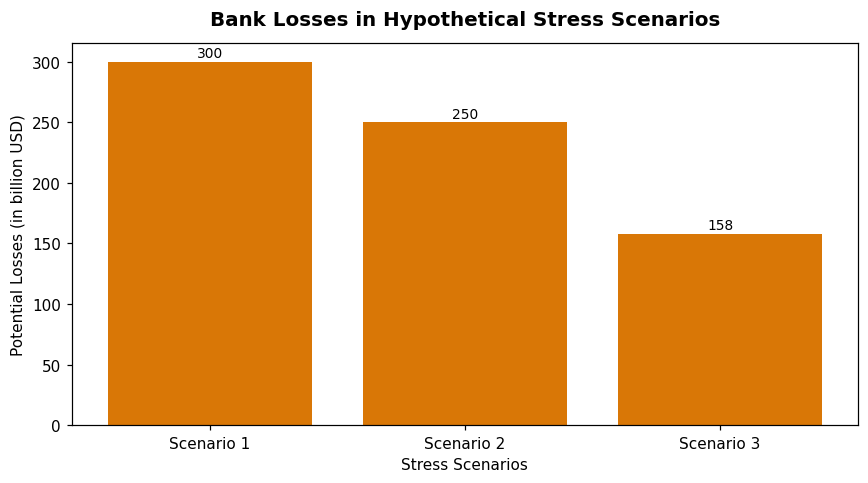
However, the decision to decouple these stress test results from immediate capital requirement adjustments is noteworthy. Historically, banks failing to meet the stress test criteria would face restrictions on shareholder payouts until they bolstered their capital reserves. This year, the Federal Reserve’s approach seems to be more observational, possibly reflecting confidence in the banks’ current capital buffers or a strategic pivot towards longer-term regulatory recalibration.
Understanding the Mechanism Behind the Tests
For those not steeped in financial regulation, the stress tests are essentially hypothetical exercises designed to simulate how banks might fare during dire economic conditions. They measure the resilience of banks’ capital positions by projecting potential losses, revenues, and capital ratios under a variety of stress scenarios. The goal is to ensure that banks have sufficient capital to continue operations through economic downturns, thereby safeguarding the broader financial system.
The stress tests, introduced in the wake of the 2008 financial crisis, have evolved into a crucial tool for maintaining financial stability. By forcing banks to hold more capital against unexpected losses, these tests have reinforced the sector’s shock absorbers, reducing the likelihood of taxpayer-funded bailouts. This year’s results, while not directly influencing capital requirements, still provide critical insights into the sector’s preparedness for financial volatility.
Winners and Losers: The Impact Across the Sector
The immediate beneficiaries of this year’s stress test outcomes are the large U.S. banks, which have been given a clear signal of their resilience. This validation could bolster investor confidence and potentially stimulate stock performance, as stakeholders perceive these institutions as stable and well-equipped to handle future crises. Moreover, with no immediate capital requirement hikes, banks have more flexibility in capital allocation, which could lead to increased dividends or share buybacks.
Conversely, smaller banks and financial institutions, which often operate with thinner capital margins, may find themselves at a relative disadvantage. The focus on larger banks in the stress tests could divert regulatory and public attention away from potential vulnerabilities within smaller institutions. These smaller entities might face greater scrutiny if future regulatory revisions target perceived gaps in existing frameworks.
What This Signals for Banking Regulation
The Federal Reserve’s decision to separate stress test outcomes from capital mandates may signal a broader regulatory recalibration. This approach suggests a shift towards more flexible, potentially more adaptive regulatory oversight. It reflects a confidence in the health of the banking sector that has been built up over decades of stringent capital requirements and heightened oversight.
This policy pivot could also indicate that regulators are preparing for a new era of financial oversight, one that balances stability with growth. As banking evolves with technological advancements and global economic shifts, the regulatory frameworks may need to adapt to ensure they remain relevant and effective. The decoupling of stress test results from immediate regulatory action could be the first step in this evolution.
Looking Forward: The Future of Financial Oversight
The Federal Reserve’s latest stress test results and the strategic regulatory decisions accompanying them provide a glimpse into the future of financial oversight. The resilience demonstrated by U.S. banks offers a reassuring narrative of stability, but the regulatory shift hints at a more nuanced approach to overseeing financial institutions. As the sector continues to navigate complex global challenges, from geopolitical tensions to technological disruptions, the regulatory landscape must evolve accordingly.
While the immediate regulatory impact of these stress test results is limited, their strategic implications are far-reaching. Regulators, policymakers, and financial institutions alike must remain vigilant and adaptable, ensuring that the safeguards put in place are not only robust but also responsive to future uncertainties. The real test for the banking sector, and indeed for its overseers, will be how effectively they can anticipate and adapt to the next wave of economic challenges.
Editorial Note: This article was produced with AI assistance and reviewed by the Celloraa editorial team for accuracy and clarity. It is intended for informational purposes only.
Read our Editorial Policy.
Leave a Reply