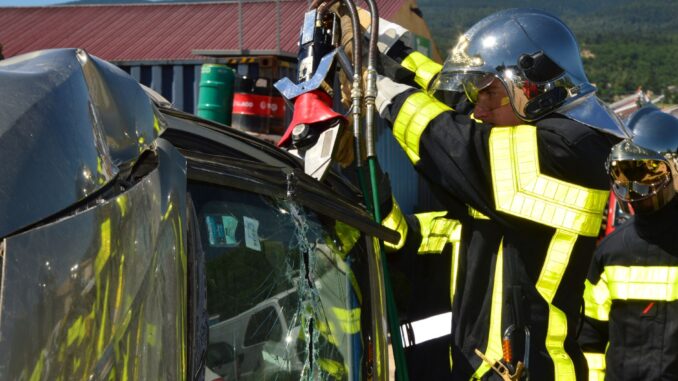
Photo by Ulrick Trappschuh on Pexels
For years, the skydiving industry has marketed tandem jumps as one of the safest forms of adventure sport, with fatal accident rates measured in fractions of a percent. That narrative was shattered on Sunday when a single-engine aircraft carrying ten parachutists and a pilot crashed in eastern France, killing everyone on board. The accident, which occurred near the small commune of Saint-Jean-de-La-Porte in the Auvergne-Rhône-Alpes region, instantly became the deadliest skydiving-related aviation disaster in France in more than a decade — and one of the most lethal in European history.
What had been a routine morning at the local drop zone turned into a scene of total destruction. According to a statement from the prefecture of Isère, the plane — a vintage Cessna 208 Caravan operated by a regional skydiving club — went down in a wooded area shortly after takeoff. There were no survivors among the pilot and the ten passengers, among them five individuals who were making their very first parachute jump. The fact that so many first-timers were on board — and that not a single person managed to exit the aircraft before impact — has raised urgent questions about pre-flight procedures, emergency egress training, and the structural integrity of the aircraft during its final moments.
This is not a routine accident report. It is a case study in how quickly even well-regulated skydiving operations can unravel, and a reminder that the safety record of the sport depends as much on the reliability of the aircraft as on the skill of the parachutists.
The Flight and the Fatal Descent
The accident occurred at approximately 10:30 a.m. local time on Sunday, 28 June 2026. The Cessna 208 Caravan, a high-wing, single-engine turboprop widely used by skydiving clubs around the world for its ability to carry up to 14 people, took off from the Altisud parachute center near the village of Saint-Jean-de-La-Porte. Witnesses on the ground reported hearing an engine sputter and cut out just minutes after departure, followed by the sound of the aircraft banking sharply and then a heavy impact. The wreckage was located in a densely forested area roughly two kilometers from the airfield, largely consumed by a post-crash fire that hindered initial rescue efforts.
Local prosecutors have opened a preliminary investigation for involuntary manslaughter, and the French Bureau of Enquiry and Analysis for Civil Aviation Safety (BEA) has dispatched a team of investigators to the site. The BEA will focus on three primary areas: the aircraft’s mechanical condition, the pilot’s actions and experience, and the operational procedures of the drop zone. The Cessna 208 fleet has experienced a number of fatal engine failures in recent years — most notably the 2019 crash in Hawaii that killed 11 people — and early speculation among the French aviation community has centered on a possible loss of engine power during climb-out, a phase of flight that leaves little time to return to the runway and even less time for passengers to react.
What makes this incident particularly disturbing for veteran skydivers is that the aircraft was carrying five first-time jumpers — individuals who would have been strapped to instructors in a tandem setup or, if making a static-line jump, would have been seated near the exit door awaiting the signal to go. For none of them to have left the aircraft suggests either a very rapid deterioration of flight conditions or an aircraft configuration that prevented any emergency exit. Investigators will likely examine video footage from cockpit cameras and any wearable cameras among the victims, if recovered.
First-Timers Among the Victims: A Different Kind of Risk
The presence of first-time skydivers adds an emotional and regulatory dimension to the tragedy. While experienced jumpers accept a certain level of risk in their sport, first-timers often rely entirely on the professionalism and safety culture of the drop zone they choose. In France, tandem skydiving schools are required to follow strict protocols — including pre-jump safety briefings, dual-instructor harness checks, and a minimum altitude for deployment. Yet none of those precautions can save a jumper if the aircraft itself becomes uncontrollable at low altitude.
The victims’ identities have not yet been officially released, but local media reports indicate that several of the first-time jumpers were from the Lyon region and were participating in a group event organized by a private adventure company. The five experienced skydivers who also died were likely instructors or club members. That mix of veterans and novices is standard at any drop zone, but the death of all ten passengers — regardless of experience level — underscores a grim truth: when an aircraft fails at low altitude during a skydiving ascent, the aircraft itself becomes the single point of failure from which no amount of parachute skill can offer escape.
The tragedy has prompted an immediate outpouring of grief within the global skydiving community, which is tight-knit and historically cautious about media portrayal of accidents. Many jumpers have taken to social media to express solidarity with the victims’ families and to call for patience while investigators determine the cause. But there is also an undercurrent of anxiety: if a single-engine plane can fail with such catastrophic results at a well-regarded facility, what does that mean for the sport’s safety reputation?
A Grim Precedent: Skydiving Plane Crashes in Historical Context
Sunday’s crash is not an isolated anomaly. In 2018, seven people died when a de Havilland Twin Otter crashed shortly after takeoff in Uppland, Sweden, while carrying skydivers bound for a group jump. In 2017, eight people were killed in similar circumstances near the French city of Grenoble — not far from the current accident site — when a Pilatus PC-6 Porter suffered a mechanical failure and went down in a field. And in the United States, the 2019 Hawaii crash of a Cessna 208 Caravan — operated by a company called Parachute Center — killed 11 people and led to a National Transportation Safety Board (NTSB) report that flagged multiple safety deficiencies, including the operator’s failure to secure proper maintenance records and the absence of a current weather brief before takeoff.
Each of those accidents shared key characteristics with the France crash: single-engine aircraft, near full passenger loads, takeoff or climb-out phase, and no survivors. In the Hawaii case, the NTSB determined that the probable cause was the pilot’s failure to identify and respond to a critical loss of engine power during climb, which the board attributed partly to inadequate oversight by the Federal Aviation Administration. The BEA’s preliminary findings in the current case will be watched closely to see whether similar themes of pilot training, maintenance lapses, or regulatory gaps emerge.
The recurrence of these accidents — spanning different countries, operators, and aircraft types — suggests that the problem is not limited to any single make or model. Instead, the aviation industry may need to confront a systematic vulnerability: the inherent risk of single-engine operations in the skydiving role, where the aircraft is often flown near its maximum gross weight and at low altitudes where engine failure leaves virtually no glide margin. Some safety advocates have long called for the skydiving industry to shift toward twin-engine aircraft or to equip single-engine planes with more robust emergency systems, but cost and availability have kept the Cessna 208 and similar models as the workhorses of the sport.
Regulatory Scrutiny and the Operator’s Record
The spotlight now turns to the Altisud parachute center and the owner of the aircraft. French civil aviation regulations require commercial skydiving operators to hold a specific operating certificate and to submit to periodic inspections by the Direction Générale de l’Aviation Civile (DGAC). The BEA will examine whether Altisud complied with those requirements, and whether any recent maintenance issues were reported but not addressed. The pilot’s experience and flight-hour history will also be reviewed.
Industry observers note that the regulatory environment for skydiving operations in France is among the most rigorous in Europe, but that enforcement can be uneven. Smaller clubs may operate with older aircraft and less formal safety management systems. The challenge for regulators is to strike a balance that does not crush small businesses with compliance costs while still preventing the kind of catastrophe that occurred on Sunday. In the wake of this accident, the DGAC is likely to face pressure to issue emergency directives mandating additional inspections or operational restrictions for Cessna 208 aircraft used in skydiving.
The broader implication extends beyond France. International skydiving organizations, including the International Parachute Commission of the Fédération Aéronautique Internationale, may use this accident to update their own recommended safety standards. The conversation will not be comfortable: it may involve acknowledging that the current approach — trusting the reliability of a single engine and the judgment of a pilot — is no longer sufficient in an era when the public expects near-zero risk from commercial adventure activities.
What to Watch: Investigation, Regulation, and the Future of Skydiving Safety
In the days and weeks ahead, the BEA is expected to release a cockpit voice recorder download, if available, and a preliminary factual report within 30 days. The forensic analysis of the engine will be critical: if metal fatigue, fuel contamination, or a design flaw is identified, the manufacturer Textron Aviation could face legal and regulatory consequences. If pilot error is cited, the question will shift to what training and support the operator provided.
For the families of the 11 victims, no finding will restore what was lost. But for the broader skydiving community and the regulators who oversee it, this accident should serve as a catalyst for something more than grief. The numbers are stark: in the last decade, at least four major skydiving aircraft accidents have killed a combined total of 37 people. The pattern is clear enough to demand action — whether that means phasing out single-engine planes for passenger-carrying skydiving flights, requiring the installation of whole-aircraft parachute systems, or imposing stricter pilot-duty and maintenance scheduling. The industry has a choice: treat these tragedies as independent misfortunes, or accept that they are symptoms of a structural risk that can — and must — be engineered away.
Editorial Note: This article was produced with AI assistance and reviewed by the Celloraa editorial team for accuracy and clarity.
It is intended for informational purposes only.
Read our Editorial Policy.
Leave a Reply