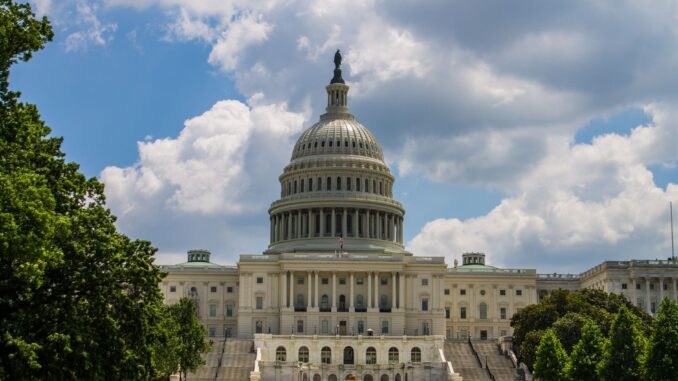
A Salvadoran mother in Los Angeles wakes to her four-year-old asking for breakfast. He was born in a county hospital, two months premature, saved by American neonatal care. Within hours of the Supreme Court’s ruling on Tuesday, she knows the question she had feared since the president’s first executive order in January 2025 will never come: Will my son be stripped of his citizenship? The headline of the Court’s decision — a 6–3 majority, with Chief Justice Roberts writing for five — is not merely a legal victory for immigrant families. It is a structural rebuke to the Trump-era theory that a president can unilaterally rewrite the Constitution’s most fundamental definition of belonging.
The ruling, issued on the morning of June 30, 2026, dismantles Executive Order 13902, which had directed federal agencies to deny citizenship documents to children born in the United States to parents without lawful permanent status. Lower courts had already frozen the order, but the Supreme Court’s definitive judgment — that the Fourteenth Amendment’s Citizenship Clause is self-executing and beyond executive revision — closes the door on a policy that would have affected an estimated tens of thousands of births per year. More than a legal skirmish, the case represents a fundamental test of whether the United States remains a jus soli nation — a country where soil, not blood, confers belonging.
How We Got Here: From Campaign Promise to Constitutional Gauntlet
The fight over birthright citizenship did not begin in the Oval Office. It has simmered since the 1990s, when restrictionsists first argued that the phrase “subject to the jurisdiction thereof” — a clause added to the Fourteenth Amendment after the Civil War to overrule the Dred Scott decision — could be read to exclude the children of undocumented immigrants. That interpretation was marginal for decades, rejected by every sitting president until Donald Trump made it a central plank of his 2024 campaign. In a series of rallies, he promised to end “birth tourism” and what he called “the anchor-baby loophole,” claiming it invited illegal immigration and rewarded defiance of the law.
Once back in office, Trump moved quickly. On January 22, 2025, he signed Executive Order 13902, directing the Department of Homeland Security, the State Department, and the Social Security Administration to refuse citizenship documentation to any child born in the United States to a mother who was “neither a citizen nor a lawful permanent resident” at the time of birth. The order carved out narrow exceptions — children of diplomats, for instance — but otherwise aimed to transform a 127-year-old consensus. Within days, a coalition of nineteen states, led by California and New York, sued in federal district court in San Francisco. The American Civil Liberties Union, the National Immigration Law Center, and the Justice Department’s own Office of Legal Counsel (which had warned the order was unconstitutional) all filed separate challenges.
The case moved swiftly, bypassing the circuit court on an expedited appeal. The Supreme Court granted certiorari in September 2025, oral arguments consumed two hours in November, and the justices deliberated for seven months — an unusually long period that signaled deep internal division. The final opinion, released Tuesday, draws heavily on United States v. Wong Kim Ark (1898), in which the Court held that a child born in San Francisco to Chinese parents who were lawful permanent residents — but ineligible for naturalization under the Chinese Exclusion Act — was a U.S. citizen. Chief Justice Roberts’s majority opinion notes that the logic of Wong Kim Ark has never been limited to lawful permanent residents; it extends to all persons “subject to the jurisdiction” of the United States, meaning they are required to obey American law — a condition that undocumented immigrants plainly meet.
Key Stakeholders and Their Competing Interests
The ruling reopens a national debate with no clear partisan consensus. The major players — their positions, legal arguments, and immediate stakes — reveal a fracture that runs deeper than the usual left-right divide.
Key Stakeholders in the Birthright Citizenship Ruling (June 30, 2026)
| Stakeholder | Position | Legal or Policy Argument | Likely Next Steps |
|---|---|---|---|
| Trump administration | Opposed birthright citizenship | Executive has inherent power to interpret the 14th Amendment; ‘jurisdiction’ excludes undocumented immigrants | May push for a constitutional amendment; dropped litigation, but allies in Congress will introduce symbolic bills |
| California et al. (plaintiff states) | Defended birthright citizenship | Order violated equal protection and federalism; costs to states would be prohibitive | Implement ruling; monitor for federal legislation; prepare to challenge any new statute |
| House Freedom Caucus | Supports ending birthright citizenship | Only a constitutional amendment or new statute can override the ruling | Introduce amendment resolution; pressure leadership for floor vote |
| Senate Democrats | Defends birthright citizenship | Clause is self-executing; precedent is settled | Block any amendment or restrictive statute; use ruling in 2028 campaign |
| ACLU / immigrant rights groups | Opposed executive order | Order violated the Constitution, international law, and due process | Advocate for citizenship education; monitor federal agencies for non-compliance |
| UNHCR / EU | Critical of executive order | Order risked statelessness; violated international norms | Applaud ruling; push for global standards on statelessness prevention |
The Trump administration — supported by a network of immigration restrictionist groups like the Federation for American Immigration Reform (FAIR) and the Center for Immigration Studies — argued that the Fourteenth Amendment’s framers never intended to cover the children of foreigners who entered illegally. The president’s lawyers asserted that sovereignty requires a nation to control its citizenship criteria, and that the executive branch has inherent authority to interpret the Constitution when the legislative branch has been silent. The administration’s immediate loss is political and legal: the executive order is dead, and no similar policy can be revived without a constitutional amendment, which requires a two-thirds vote in both chambers and ratification by three-quarters of the states.
Plaintiff states — led by California, New York, Illinois, and New Jersey — argued that Trump’s order would have forced them to administer a dual-class system of citizenship, destabilizing everything from public health records to school enrollment. California alone reports roughly 60,000 births per year to undocumented parents; the state estimated that compliance with the order would have required a new tracking infrastructure costing hundreds of millions. The states won a clear victory, but they also face a long-term challenge: the ruling may stiffen Republican resolve to pass a federal statute that would attempt to define “jurisdiction” more narrowly, though most constitutional scholars believe such a statute would also be struck down.
Congressional Republicans are split. Hardliners in the House Freedom Caucus already promise a constitutional amendment; moderates in swing districts fear a voter backlash. Senators Lindsey Graham (R-SC) and Tom Cotton (R-AR) have long championed legislation to end birthright citizenship, but their proposals have never reached 60 votes. After Tuesday’s ruling, the political calculus shifts: Republicans must decide whether to campaign on a constitutional amendment that is virtually impossible to pass in the next decade or to drop the issue ahead of the 2028 election. The Democratic majority in the Senate is slim but enough to block any amendment.
Immigrant rights organizations — the ACLU, the National Immigration Law Center, and grassroots coalitions like “Birthright Is Ours” — framed the case as a defense of the most American principle: that the accident of one’s parents’ status should not determine one’s national identity. Their victory is resounding, but they worry that the Court’s 6–3 split on ideological lines signals vulnerability. Justice Thomas’s dissent, joined by Justice Alito and partially by Justice Gorsuch, argued that the majority conflated “jurisdiction” with “allegiance,” a distinction that might be resurrected in a future case if the Court’s composition changes.
International observers — from the United Nations High Commissioner for Refugees to the European Union’s justice commissioner — had condemned the executive order as a violation of the 1961 Convention on the Reduction of Statelessness. The ruling restores the United States’ position as one of only 30 countries — including Canada, Mexico, and most of Latin America — that grant unconditional birthright citizenship. By contrast, the majority of nations, including Australia, India, and virtually all of Europe, require at least one parent to be a citizen or legal permanent resident.
Below is a summary of the key stakeholders’ positions and likely next moves:
Global Reactions and Historical Precedent
Tuesday’s ruling reverberates beyond American borders. In countries where birthright citizenship is hotly contested — including the Dominican Republic, which retroactively stripped citizenship from children of Haitian migrants in 2013 — the Court’s reaffirmation of jus soli provides a powerful counter-narrative. The United Nations High Commissioner for Refugees issued a statement within hours of the ruling, calling it “a landmark for the prevention of statelessness.” The European Union’s commissioner for justice, Didier Reynders, noted that while Europe overwhelmingly uses jus sanguinis, the decision reinforces the principle that citizenship should not be arbitrarily withdrawn.
Historically, the ruling echoes the Court’s earlier rebukes of executive overreach in matters of citizenship. In Afroyim v. Rusk (1967), the Court held that Congress cannot revoke a naturalized citizen’s citizenship without their consent — a decision rooted in the Fourteenth Amendment’s guarantee that “all persons born or naturalized in the United States … are citizens.” The majority in Afroyim argued that citizenship is a “constitutional right” that cannot be taken away by the political branches. Roberts’s opinion explicitly cites Afroyim as a parallel: if Congress cannot unilaterally remove citizenship once granted, the president certainly cannot refuse to grant it in the first place.
The dissenting opinion, written by Justice Thomas and joined by Alito and Gorsuch, represents the most serious modern challenge to the Wong Kim Ark consensus. Thomas argues that the phrase “subject to the jurisdiction thereof” originally meant “not owing allegiance to any foreign power,” and that the children of undocumented immigrants — who are, in his view, born with an allegiance to their parents’ country of nationality — fall outside that definition. The dissent is careful not to endorse the president’s executive order outright, but it provides a detailed roadmap for opponents to seek a future lawsuit that presents a different factual record, perhaps involving a child of a mother who entered illegally and committed a crime, thereby potentially breaking the “allegiance” argument. Legal scholars at Harvard and Yale — including Professor Noah Feldman in the New York Times — have largely dismissed Thomas’s historical reading as selective, but they concede that the 6–3 split leaves the door open for a challenge if the Court’s composition changes.
What Comes Next: The Unfinished Business of Citizenship
The ruling is final for this presidency, but the debate over birthright citizenship will not disappear. Within hours of the decision, leaders of the House Freedom Caucus announced they would introduce a constitutional amendment to limit citizenship to children of at least one citizen or lawful permanent resident, though the amendment process is so arduous that even proponents privately acknowledge it is a messaging exercise. Senate Majority Leader Chuck Schumer said the ruling “should put to rest any notion that the president can ignore the Constitution to score political points,” and he pledged to block any legislative attempts to undermine the decision.
The more significant, less visible consequence may unfold inside federal agencies. During the nine months the executive order was in effect — before the Supreme Court stayed it — some immigration officers had followed a new protocol to mark citizenship applications from newborns as “pending.” The Department of Homeland Security will now have to expunge those records and process any delayed certificates. The administration has pledged compliance, but immigrant advocates are wary of bureaucratic foot-dragging. The ACLU has already filed a motion asking the federal district court to retain jurisdiction to monitor implementation.
Internationally, the ruling may influence court cases in other common-law countries. In the United Kingdom, where the Conservative government has considered tightening birthright rules for children of temporary visa holders, legal experts are watching the U.S. Supreme Court’s reasoning closely. In Canada, where birthright citizenship is similarly guaranteed by the Constitution Act, the ruling is likely to strengthen the hand of those who oppose any modification. The timing is also sensitive: the United States is less than four months away from the 2026 midterm elections, and immigration has consistently polled as the second-most important issue for voters after the economy. The ruling may energize both sides — galvanizing immigrant-rights voters and inflaming restrictionist anger — but its immediate effect is to remove one of the most divisive tools candidates on the right could use to command attention.
Tuesday’s decision does more than settle a legal question. It reiterates a founding bargain that sets the United States apart from most of the world: that citizenship is a right of place, not a prize earned through family lineage. For the Salvadoran mother in Los Angeles, the ruling means her son’s birth certificate will never be questioned. For the nation, it means the constitutional order held against the most determined executive challenge in a century — at least for now.
Editorial Note: This article was produced with AI assistance and reviewed by the Celloraa editorial team for accuracy and clarity. It is intended for informational purposes only.
Read our Editorial Policy.
Leave a Reply