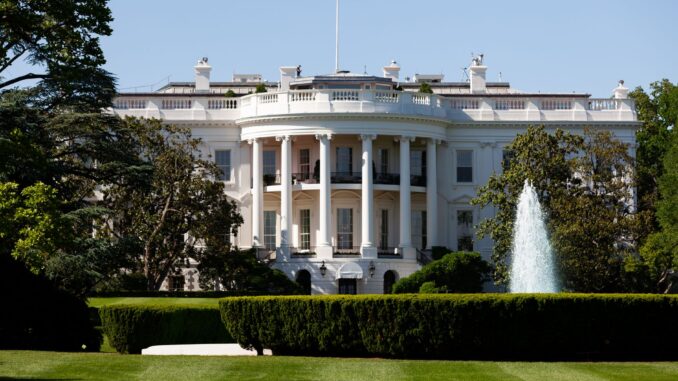
Photo by Simon Gagner on Pexels
For more than a century, the simple fact of being born on American soil has conferred citizenship automatically, a principle rooted in the 14th Amendment and the 1898 case of United States v. Wong Kim Ark. That bedrock assumption now faces a direct, if improbable, challenge. President Donald Trump on Wednesday formally petitioned the U.S. Supreme Court to reconsider its ruling from just a week ago, which affirmed a constitutional right to citizenship for anyone born in the United States, regardless of their parents’ immigration status.
The filing marks the most aggressive legal gambit yet by an administration that has made restricting both legal and illegal immigration a central pillar of its second term. It also signals that, even after a decisive defeat at the high court, the White House sees political advantage in forcing the issue back onto the national stage. The Court’s current term has already ended, but Trump’s petition asks for an extraordinary intervention — a rehearing of a case the justices just resolved by an 8-1 margin.
A Legal Theory Rejected at Every Turn
The legal battle over birthright citizenship did not begin with Trump’s White House, but his administration gave it new urgency. Shortly after taking office, the president issued an executive order directing federal agencies to refuse citizenship documents to children born in the United States to parents who are in the country illegally or on temporary visas. Multiple lawsuits quickly followed, and federal district courts in Maryland, California, and Washington, D.C., uniformly struck down the order as a violation of the 14th Amendment’s Citizenship Clause.
Key Milestones in U.S. Birthright Citizenship Law
| Year | Event | Significance |
|---|---|---|
| 1868 | Ratification of the 14th Amendment | Established citizenship for all persons born in the U.S. and subject to its jurisdiction. |
| 1898 | United States v. Wong Kim Ark | Supreme Court affirmed that a child born in the U.S. to non-citizen parents is a citizen. |
| 1982 | INS v. Chadha | Struck down legislative veto, but also reaffirmed that status determination is a federal power. |
| 2015–2020 | Proposed legislation to end birthright citizenship | Multiple bills introduced in Congress but never passed. |
| 2025 | Trump executive order on birthright citizenship | Ordered agencies to deny citizenship documents; immediately blocked by courts. |
| June 30, 2026 | Supreme Court ruling upholding birthright citizenship | 8-1 decision affirming that the 14th Amendment guarantees citizenship to all born in the U.S., regardless of parents’ status. |
| July 8, 2026 | Trump petitions for rehearing | Long-shot request to reconsider the ruling; widely expected to be denied. |
That clause — ratified in 1868 — states: “All persons born or naturalized in the United States, and subject to the jurisdiction thereof, are citizens of the United States and of the State wherein they reside.” The administration’s legal argument has centered on the phrase “subject to the jurisdiction thereof,” claiming that children of undocumented immigrants are not fully subject to U.S. jurisdiction because their parents owe no allegiance to the country. Courts have consistently rejected that reading, pointing to the original intent of the amendment and the 1898 Supreme Court ruling in Wong Kim Ark, which held that a child born in the U.S. to Chinese immigrant parents was a citizen, even under a discriminatory law that barred Chinese from naturalizing.
The recent 8-1 decision on June 30, 2026, effectively made that precedent explicit: birthright citizenship applies to everyone born on U.S. soil, with only narrow exceptions for children of foreign diplomats, enemy soldiers, or tribal nations. The Trump administration’s petition asks the Court to accept a rehearing, but legal experts across the ideological spectrum consider the chances of success vanishingly small. The Supreme Court rarely grants such requests, and almost never when the original ruling was recent and strongly bipartisan.
What Ending Birthright Citizenship Would Mean for American Families
The practical stakes of the case are enormous. According to data from the Pew Research Center and the Migration Policy Institute, approximately 250,000 children are born in the United States each year to parents who are in the country without legal status. If the Supreme Court were to reverse course, those infants would be denied U.S. citizenship, becoming at birth what immigration lawyers term “stateless” individuals — without a legal nationality or the rights that come with it.
The ripple effects would cascade through American society. Schools, hospitals, and public health agencies would be forced to collect immigration status information from newborns and their families. State driver’s license agencies and Social Security offices would need to redesign their eligibility systems. Millions of families who have been in the United States for years, with mixed-status households including both citizens and non-citizens, would suddenly face an impossible bureaucratic tangle. Children denied citizenship would have no pathway to work legally, vote, or access federal student loans when they reach adulthood.
Beyond the immediate numbers, the change would represent a fundamental redefinition of American citizenship itself. The principle of jus soli — birthright citizenship — is one of the few legal doctrines that has remained stable across more than 150 years of shifting immigration policy. Altering it would not only affect future births but could also open the door to questions about the citizenship of millions of people born in the past, given that the administration’s interpretation of the 14th Amendment would logically retroactively call into question the status of previous generations. Legal scholars have warned that such a change could create a permanent underclass of people living in the United States without any meaningful path to belonging.
Voices Across the Spectrum: From Outrage to Celebration
The response to Wednesday’s petition has been deeply divided along predictable lines, but with notable internal fractures on both sides.
Immigrant-rights advocacy groups, including the National Immigration Law Center and the American Civil Liberties Union, expressed cautious confidence. Omar Jadwat, director of the ACLU’s Immigrants’ Rights Project, said in a statement that the petition was “a transparently political attempt to relitigate a case the Supreme Court already resolved with clarity and finality.” He added, “The Court should reject this stunt without any delay.”
On the other end of the spectrum, restrictionist organizations such as NumbersUSA and the Federation for American Immigration Reform (FAIR) praised the administration’s persistence. “President Trump is fighting to restore the original meaning of the 14th Amendment,” said Dan Stein, president of FAIR. “The Supreme Court’s ruling was an act of judicial overreach that ignored the clear intent of the framers. We fully support his request for a rehearing.”
Among legal scholars, the consensus is nearly universal that the petition will fail. “I can’t think of a single precedent where the Court reversed itself on a long-settled constitutional question less than two weeks after a sweeping majority opinion,” said Ilya Somin, a law professor at George Mason University who has written extensively on immigration. “This looks like an effort to score political points rather than a serious legal move.” Even conservative jurists who personally favor ending birthright citizenship have acknowledged that the amendment’s plain text and history strongly support the established rule.
In Congress, reactions were equally split. Democratic leaders pointed to the ruling as a vindication of constitutional values and called on the administration to drop its efforts. Senate Majority Leader Chuck Schumer (D-NY) said the petition was “a cynical act of political theater that discredits the presidency.” A handful of House Republicans, however, introduced legislation to amend the 14th Amendment to restrict birthright citizenship — a step that would require a two-thirds vote in both chambers and ratification by three-quarters of the states, a near-impossible hurdle in the current political climate.
What Comes Next: The Certainty of the Court and the Uncertainty of Politics
The Supreme Court will likely deny the petition for rehearing within a matter of weeks, possibly before the start of its October 2026 term. The procedural path is straightforward: the party that lost must file a petition within 25 days of the judgment; the Court then votes on whether to grant it. With last week’s 8-1 decision, only Justice Clarence Thomas joined a partial dissent on jurisdictional grounds, and no justice has indicated a willingness to revisit the merits. The more significant development here is not the legal outcome but the political signal it sends.
By forcing the issue back into the headlines, Trump is laying groundwork for a campaign issue that could energize his base ahead of the 2026 midterm elections. The battle over birthright citizenship is a potent wedge issue: it ties together broader anxieties about immigration, national identity, and the power of the federal courts. However, it also risks alienating moderate and swing voters who see the 14th Amendment as a core part of American identity. Polling over the past two years has shown that a majority of Americans — including about one-third of Republicans — support preserving birthright citizenship.
The Trump administration’s long-shot bid, then, is best understood not as a serious effort to change constitutional law, but as a political statement. It tests the limits of how far executive pressure can push against established judicial precedent, and it forces every elected official, advocate, and voter to take a clear stand on a question that reaches to the heart of what it means to be American. In that sense, the Supreme Court may have the final word on the law, but the debate over citizenship is far from over.
Editorial Note: This article was produced with AI assistance and reviewed by the Celloraa editorial team for accuracy and clarity. It is intended for informational purposes only. Read our Editorial Policy.
Leave a Reply