Photo by Erik Mclean on Pexels
The crack of gunfire at a midsummer street festival in Toronto has once again thrust Canada’s careful balance between public safety and recreational firearm ownership into the harsh light of scrutiny. Police confirmed that two people were killed and two firearms recovered after an exchange of gunfire between two individuals at the event, which drew hundreds of attendees. The incident, reported Sunday by the BBC, is the latest in a string of high-profile shootings in a country often held up as a model for stricter gun laws compared to its southern neighbor.
The shooting occurred during a community festival in a residential neighborhood of Toronto. Details remain scarce, but police spokesperson Constable Laura Bell said officers arrived to find two deceased individuals and recovered two handguns at the scene. No other injuries have been reported. Authorities have not released the identities of the victims or the suspect, nor have they disclosed whether anyone has been taken into custody. The investigation is ongoing.
The more significant development here is not merely the loss of life but what this event says about the persistent challenge of illegal firearms in Canada. Despite a 2020 ban on over 1,500 models of assault-style weapons and a national freeze on handgun transfers implemented in 2022, shootings at public gatherings continue to occur. This tension — between comprehensive federal policy and the reality of illicit guns — defines the current debate.
Gunfire at a Community Gathering: What Officials Have Confirmed
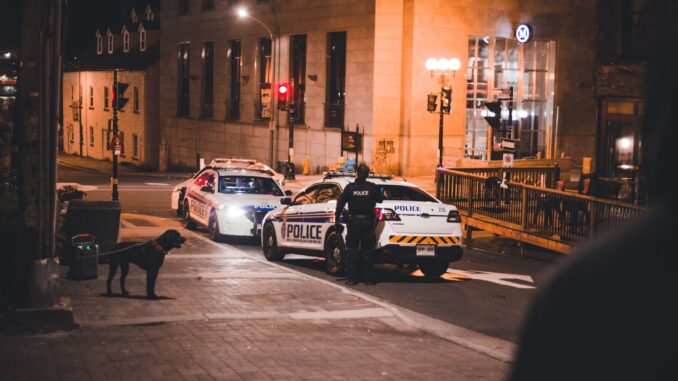
Toronto Police cordoned off several blocks near the festival site late Saturday evening as forensic teams scoured the scene. According to the BBC report, the exchange of gunfire involved two individuals, suggesting a targeted altercation rather than a random spree. Yet the setting — a family-friendly outdoor festival — means the consequences reverberate far beyond those directly involved.
“This was a violent act in a place where families came to enjoy a summer evening,” said Toronto Mayor Olivia Chow in a brief statement. “We will work with police to ensure those responsible are brought to justice.” The mayor’s office declined to provide additional details pending the investigation.
Police have not commented on the type of firearms recovered, but the recovery of two handguns points to the category of weapons most commonly used in Canadian homicides. According to Statistics Canada, handguns accounted for 59% of firearm-related homicides in 2021, a trend that has held steady for years. The majority of these guns are illegally obtained, often smuggled from the United States.
A Pattern of Public Shooting Incidents: Comparing to the Danforth Case
This tragedy invites comparison to the 2018 Danforth shooting in Toronto, where a lone gunman killed two people and wounded 13 others along a busy restaurant strip. In that case, the shooter used a handgun obtained illegally and ended his own life after exchanging fire with police. Similarities are stark: both occurred on a summer weekend in a crowded public space frequented by families, and both involved handguns rather than rifles.
Recent Mass Casualty Incidents in Canada Involving Firearms
| Incident | Year | Location | Deaths | Injuries |
|---|---|---|---|---|
| Toronto Festival Shooting | 2026 | Toronto, ON | 2 | 0 |
| Danforth Shooting | 2018 | Toronto, ON | 2 | 13 |
| Quebec City Mosque Shooting | 2017 | Quebec City, QC | 6 | 19 |
| Nova Scotia Massacre | 2020 | Portapique, NS | 22 | 3 |
The Danforth shooting prompted calls for stricter handgun controls, which eventually culminated in the federal government’s freeze on handgun transfers. Yet the current incident suggests that legislative action alone cannot eliminate the threat when illegal firearms circulate across borders. “No law can stop every bad actor from getting a gun illegally,” said Heidi Rathjen, a gun-control advocate and coordinator of the PolySeSouvient group, which formed after the 1989 École Polytechnique massacre. “But that doesn’t mean we should stop trying.”
Another relevant precedent is the 2020 Nova Scotia mass shooting, which left 22 people dead and led to public inquiries that exposed gaps in firearm licensing and police response. While that rampage involved legally obtained rifles and a replica police vehicle, the common thread is that public gatherings — from barbecues to festivals — are vulnerable points of attack. The Toronto street festival shooting reinforces a grim reality: no location is off-limits for gun violence, regardless of Canada’s legal framework.
Concrete Effects on Daily Life: How Canadians Experience the Aftermath
For ordinary Canadians, the immediate effect is a chilling of the public sphere. Festival organizers across the country are now reassessing security protocols. In the aftermath of the Toronto shooting, similar events in Vancouver, Montreal, and Halifax face increased police presence and more stringent bag checks. “We take our cues from local law enforcement, but incidents like this make people think twice about where they take their kids,” said Amanda Lee, co-organizer of a street festival in Vancouver’s East Side.
Beyond the security adjustments, the psychological toll is measurable. A 2023 survey by the Canadian Mental Health Association found that 38% of Canadians reported feeling unsafe in large crowds, a figure that rises after high-profile shootings. The Toronto shooting is likely to amplify that anxiety, particularly in urban centers where festivals are a staple of summer culture.
On a policy level, the event may accelerate existing calls to further restrict access to handguns and to increase funding for border security to stem the flow of smuggled firearms. The Canada Border Services Agency has reported a steady increase in firearm seizures at the US-Canada border, but critics argue that more resources are needed to intercept the estimated 1,000 illegal guns entering Canada each week.
Stakeholder Reactions Across the Spectrum
The shooting has drawn responses from a wide range of stakeholders. Gun-control advocacy groups like the Coalition for Gun Control have called for a renewed push to close what they describe as loopholes in the current legislation, including the regulation of firearm components and unfinished frames that can be assembled into functional handguns.
Conversely, firearms rights organizations such as the Canadian Coalition for Firearm Rights argue that the problem is not law-abiding gun owners. “Criminals by definition do not follow laws,” said spokesperson Sarah Cunningham. “The focus should be on enforcement and border security, not on punishing licensed hunters and sport shooters.” This view finds support among some rural and Indigenous communities where firearms are deeply embedded in tradition and subsistence living.
Law enforcement perspectives emphasize the difficulty of preventing impulsive acts in public spaces. “Even with the best intelligence, stopping a sudden exchange between two individuals is nearly impossible,” said retired RCMP superintendent Mick Roscow. “The lesson here is about community vigilance and rapid response, not necessarily more laws.”
What Comes Next: Investigation, Policy, and the Upcoming Fall Election
The immediate priority for Toronto Police is the investigation. They will trace the recovered handguns to determine their origin, whether legally purchased in Canada and later stolen or diverted, or smuggled from abroad. Ballistic analysis may link the weapons to other crimes. A suspect description has not been released, but police have asked anyone with video of the festival to come forward.
Politically, the incident comes at a sensitive time. Canada will hold a federal election in October 2026, and gun control has emerged as a wedge issue. The Liberal government, which championed the handgun freeze and assault-style weapon ban, is under pressure from both sides: the left demands more restrictions, while the right argues that the measures have failed to prevent violence. The opposition Conservative Party has pledged to review the handgun freeze, arguing that it burdens lawful owners without reducing crime.
Legislatively, the governing Liberals have already introduced Bill C-45, which would create a national registry of handgun owners and prohibit the sale of firearm transferable components. The bill is stalled in parliamentary committee. The Toronto shooting may provide momentum for its passage, but the Parliamentary Budget Officer has estimated its implementation cost at over $100 million, a figure that invites debate over fiscal priorities.
Looking forward, the most lasting development may be the inevitable shift in how Canadian cities plan large public events. The era of casual festivals without metal detectors and bag checks may be drawing to a close in major urban centers. Yet the deeper question — whether Canada can significantly reduce illegal firearm violence without draconian measures — remains unresolved. The Toronto festival shooting is a stark reminder that legislative action, while necessary, is not a panacea. The next steps will require not just political will but also a sustained investment in community safety and cross-border cooperation. One thing is clear: the calculus of risk has changed for every Canadian who steps into a crowd.
Editorial Note: This article was produced with AI assistance and reviewed by the Celloraa editorial team for accuracy and clarity. It is intended for informational purposes only. Read our Editorial Policy.
Leave a Reply