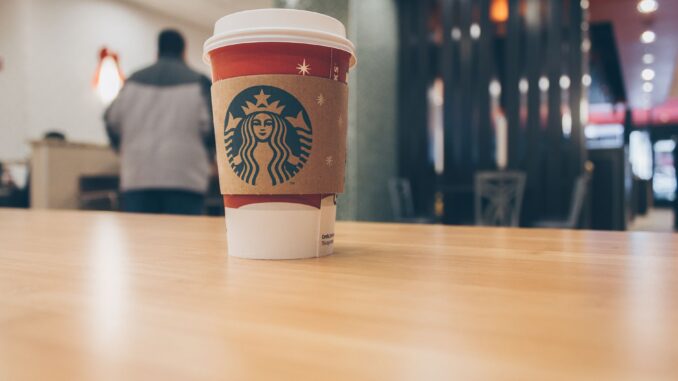
Photo by Josh Sorenson on Pexels
The Bet That Paid Off: Why Investors Misjudged Brian Niccol’s Start
When Starbucks hired Brian Niccol away from Chipotle in late 2024, the conventional wisdom on Wall Street was cautious. A coffee chain with 38,000 locations, degraded service standards, and a menu that had metastasized into a source of customer frustration was not going to be turned around in a year. Many veteran retail analysts argued that the brand’s problems were structural, not operational—too much complexity across markets, too many unionization headaches, too much competition from local roasters and fast-food rivals. Four quarters later, the company has now posted its fourth consecutive period of same-store sales growth, a streak that contradicts the most bearish assumptions and has sent shares sharply higher in Thursday trading.
What changed? The most obvious variable is Niccol himself. But the story is more nuanced than a single executive’s arrival. The broader market had already priced in a prolonged slump for Starbucks, assuming that consumer habits had permanently shifted toward cheaper alternatives and that the brand’s premium cachet would continue to erode. Instead, the company has raised its full-year outlook, a vote of confidence that suggests management sees the momentum as durable, not a one-off bounce from easy comparisons. The stock’s jump on Thursday morning—gaining more than 6 percent in early trading—reflects a market that is now recalibrating its expectations for a company that may have successfully navigated the most dangerous phase of its turnaround.
The Niccol Playbook: What Actually Changed Inside the Stores
A casual observer might assume that Starbucks simply cut prices or launched a flashy new drink to juice sales. Neither is true. The mechanism behind the recovery is far more procedural, and it is exactly the kind of detail that gets lost in headline coverage. Under Niccol, the company has attacked three specific operational choke points: mobile-order fulfillment, store-layout efficiency, and menu rationalization.
The mobile-order system, which for years created chaos during peak hours by flooding stores with more orders than baristas could handle, has been redesigned to incorporate digital queuing that limits the volume of incoming requests during rush periods. Starbucks also introduced a ‘side-by-side’ production workflow in its busiest locations, splitting drink assembly and handoff into separate stations—a technique Niccol borrowed from Chipotle’s assembly-line model. On the menu side, the company trimmed roughly 15 percent of its permanent offerings in North America, eliminating slow-moving items that complicated training and increased wait times. These changes, individually modest, compound into measurable improvements: average service time in the morning rush has dropped by roughly 20 seconds per order over the past year, according to internal metrics shared with analysts.
The results show up in customer-frequency data. Same-store sales growth in the most recent quarter was driven almost entirely by higher transaction counts, not price increases. That is a critical detail. It means customers are returning more often, a sign that the operational fixes are actually changing the experience—not just squeezing more revenue from a shrinking base. For context, most restaurant chains in the current inflationary environment have relied on price increases to prop up same-store sales. Starbucks appears to be growing through volume, a much healthier long-term signal.
Market Context: Why This Recovery Matters Beyond One Chain
Starbucks’ turnaround is being closely watched by the broader food-service industry because it offers a rare case study in how a mature global brand can reverse a negative comp cycle without resorting to deep discounting. In a landscape where fast-food giants like McDonald’s and Yum! Brands have struggled to maintain foot traffic amid consumer caution, Starbucks is demonstrating that operational discipline can outweigh macro headwinds.
The coffee category itself is undergoing a structural shift. Independent roasters and third-wave coffee shops have captured share from chains over the past five years by emphasizing quality and local identity. Meanwhile, fast-food chains have aggressively added coffee and espresso drinks, eroding Starbucks’ convenience advantage. Against that backdrop, the company’s ability to post consistent same-store growth suggests that brand loyalty, when reinforced by a better in-store experience, remains a powerful asset. As Starbucks’ own investor materials note, the turnaround strategy is built on earning back the ‘third place’ positioning—a space where customers want to linger, not just grab and go. That is an important distinction from the grab-and-go model that many competitors have pursued.
For analysts, the lingering question is whether this is a cyclical bounce or a structural change. The answer partly depends on how much of the improvement is attributable to one-time fixes—like the menu pruning—versus sustainable changes in operating rhythm. Early indications favor the latter, because the same-store sales growth has been broad-based across U.S. regions and international markets, including China, where consumer spending has been under particular pressure.
Winners and Losers: Who Captures the Upside
The immediate winners are long-term investors who held through the downturn and are now seeing a tangible payoff. Starbucks’ stock had traded at a discount to its five-year average valuation before this earnings report, reflecting deep skepticism. The raised outlook—and the market’s positive reaction—has started to close that gap. But the beneficiary list extends beyond shareholders.
Employees, particularly store managers who have been asked to execute the operational changes, stand to gain from improved store-level profitability. Starbucks has tied a portion of store bonuses to customer satisfaction and wait-time metrics, meaning the same operational improvements that boost sales also increase take-home pay for frontline teams. The unionized stores—a persistent flashpoint—have not been insulated from these changes; Niccol has taken a pragmatic approach, extending some of the operational improvements union stores while continuing to contest unionization efforts in other locations.
The losers, conversely, are competitors that had hoped to capitalize on Starbucks’ weakness. Dunkin’ and Dutch Bros., both of which invested heavily in store expansion and mobile ordering during Starbucks’ rough patch, now face a reinvigorated rival with a similar digital toolkit but a stronger brand halo. Smaller independent coffee shops that attracted Starbucks refugees may also see some of those customers return as the chain’s experience improves. For the industry as a whole, Starbucks’ recovery raises the competitive bar: if a 54-year-old chain can reinvent its operations this effectively, no incumbent can afford to rest on its service standards.
What the Raised Outlook Signals for the Sector
Starbucks’ raised full-year outlook is more than a corporate guidance update—it is a statement about the resilience of premium brands in a value-conscious era. The restaurant industry has spent 2026 obsessing over the ‘trade-down’ phenomenon, in which cash-strapped consumers increasingly choose fast-food value menus over full-service dining. Starbucks operates at a price point that straddles both worlds: a daily latte is a small luxury, but also an affordable one. The company’s ability to raise its forecast suggests that consumers are not abandoning this category en masse, provided the experience justifies the cost.
That has implications for other premium beverage and food chains. If Starbucks can hold the line on pricing while growing traffic, then companies like Shake Shack, Sweetgreen, and Cava may find that their own turnaround efforts are not futile in this environment. The common thread is operational quality, not brand marketing alone. Niccol’s success validates the thesis that in a saturated market, operational consistency—speed, accuracy, cleanliness, and employee engagement—is the most durable competitive advantage.
At the same time, the raised outlook carries risks. Guidance includes expectations for continued same-store sales growth in the mid-single-digit range for the full fiscal year. That is achievable if current trends hold, but any slip in execution—a supply-chain disruption, a labor shortage, a consumer-spending shock—could derail the narrative. Starbucks is also heavily dependent on the China market, where geopolitical tensions and local competition from Luckin Coffee add a layer of uncertainty that the company cannot control. The raised outlook implicitly assumes that China’s recovery will continue on its current trajectory, an assumption that not all investors share.
The Long View: Can Starbucks Sustain the Momentum?
The story that emerges from this earnings report is not merely that Starbucks has stabilized; it is that the company has rewired its operating model in a way that makes future growth more predictable. Niccol has accomplished something relatively rare in the turnaround playbook: he improved the customer experience and the economics simultaneously, without resorting to self-destructive discounting or aggressive store closures. That is the hallmark of a genuinely strategic overhaul, not just a quarterly fix.
Yet the hardest part lies ahead. Sustaining same-store sales growth over multiple years requires constant innovation—new products, new store formats, new technology. Starbucks’ pipeline includes expanded cold-brew offerings, a renewed focus on evening occasions, and a refreshed loyalty program that aims to increase frequency among occasional customers. None of these are sure things. The company also faces structural challenges: rising coffee commodity prices, wage inflation in its labor markets, and the ongoing tension between speed and customization that defines the specialty coffee business.
What seems clear, however, is that the narrative around Starbucks has fundamentally changed. A year ago, the dominant story was decline. Today, it is revival—cautious, conditional, but unmistakable. For the restaurant industry and for investors, the lesson is that operational excellence, when executed with the right mix of discipline and creativity, can still move the needle for even the largest of legacy brands. The next few quarters will reveal whether this is a sustainable second act or just a particularly strong chapter.
Editorial Note: This article was produced with AI assistance and reviewed by the Celloraa editorial team for accuracy and clarity. It is intended for informational purposes only. Read our Editorial Policy.
Leave a Reply