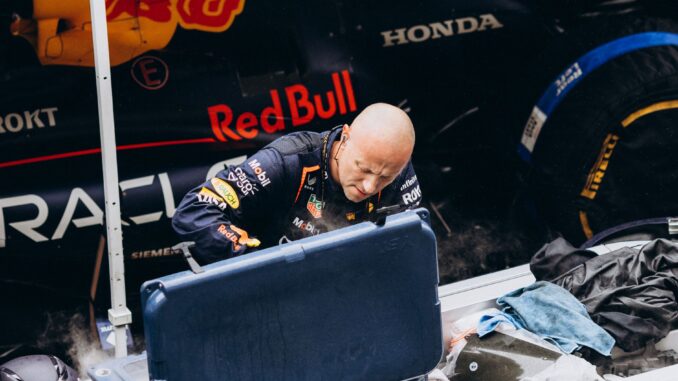
Photo by Jonathan Borba on Pexels
For years, Formula 1 fans and even some insiders assumed that the magic of motorsport was crafted almost entirely on the track. However, recent revelations about the staggering investments F1 teams make in their simulators have shifted that perspective. These aren’t just high-tech video games; they’re pivotal tools in the pursuit of milliseconds that can determine victory or defeat.
From Virtual Reality to Racing Reality
Unlike the virtual reality systems most are familiar with, F1 simulators are sophisticated, hyper-realistic environments designed to replicate every nuance of a race car’s behavior. These simulators integrate complex physics models and real-world data to offer drivers an unparalleled experience of racing dynamics. The key difference lies in their ability to process vast amounts of data in real time, ensuring that latency—the delay between input and response—is minimized to offer instantaneous feedback.
Bandwidth also plays a crucial role. The simulators must process high-fidelity graphics and real-time telemetry data without interruption or degradation. This requires not only state-of-the-art computing power but also bespoke software that can swiftly adapt to the myriad variables a driver might encounter on any given race day. The fidelity of these systems ensures that every detail of a track, from its texture to its ambient conditions, is replicated with stunning accuracy.
The Unseen Impact on Drivers and Teams
These cutting-edge simulators are not just for driver training; they have far-reaching implications for team strategy and vehicle development. By allowing drivers to practice on virtual tracks, teams can refine car setups and race strategies without the logistical challenges and costs of actual track testing. This is particularly crucial in an era where regulatory constraints limit on-track testing opportunities.
Moreover, the data collected during simulator sessions can be invaluable. Teams analyze this information to optimize vehicle performance and identify potential areas for improvement. This has led to a paradigm shift in how teams prepare for races, moving from a reactive approach to one that’s more predictive and proactive.
Industry Context and Competitive Edge
In the fiercely competitive world of F1, where each team is looking for any possible edge, simulators have become a differentiator. Leading teams invest millions in their simulator technology, creating a technological arms race off the track. This investment is not just in hardware but also in hiring top-tier software engineers and data scientists who can continually refine these systems.
Competitors outside of F1 are taking note. The advancements in simulator technology are beginning to influence other areas of the automotive industry, particularly in autonomous vehicle development. The ability to simulate real-world driving conditions with high accuracy is invaluable for testing and refining autonomous systems safely.
Ethical and Economic Implications
As with any technology that amasses vast amounts of data, there are privacy and ethical considerations. The data generated by these simulators is proprietary and highly sensitive, raising questions about data security and the potential for industrial espionage. Teams must invest in robust cybersecurity measures to protect their competitive advantages.
Economically, the high cost of developing and maintaining these simulators means that only the wealthiest teams can afford the latest advancements, potentially widening the gap between the top teams and their less financially endowed competitors. This raises questions about the fairness and accessibility of technology in F1, a sport already under scrutiny for its resource disparities.
The Road Ahead: Beyond the Checkered Flag
The future of F1 simulators looks set to expand beyond their current use. As technology continues to advance, we can expect even more integration between simulation and real-world racing, perhaps blurring the lines between the two. The potential for collaboration with sectors like aerospace, where similar simulation technologies are employed, could lead to breakthroughs in both fields.
Moreover, as sustainability becomes an ever-more critical issue, simulators may play a key role in reducing the carbon footprint of racing by minimizing the need for traditional on-track testing. This could align the traditionally extravagant sport with broader environmental goals.
In conclusion, while the thrill of Formula 1 will always be about the race itself, the burgeoning role of simulators underscores the sport’s evolution into a data-driven endeavor. As technology and competition continue to push the boundaries of what’s possible, the simulator’s role in shaping the future of racing will only grow more significant.
Editorial Note: This article was produced with AI assistance and reviewed by the Celloraa editorial team for accuracy and clarity.
It is intended for informational purposes only.
Read our Editorial Policy.
Leave a Reply