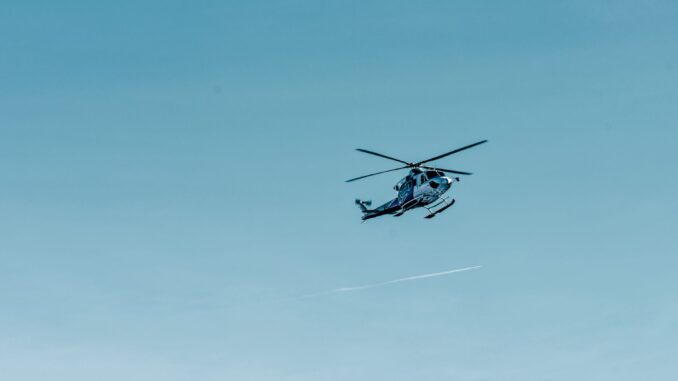
In a startling revelation of modern warfare’s unpredictable nature, a low-cost Iranian drone reportedly collided with a $25 million U.S. Army helicopter, causing significant damage. This incident, which appears to have been a chance encounter, has sparked a series of military and strategic responses, underscoring the increasingly blurred lines between expensive military technology and cheaper adversarial tactics.
Unpacking the Incident: What Happened and How?
The incident occurred during an aerial patrol when a small, inexpensive Iranian drone made contact with the helicopter, resulting in its grounding. The drone, which costs a fraction of the helicopter’s value, was initially thought to be operating independently of any direct attack strategy, raising questions about its purpose and the implications of such a collision. The U.S. military’s response was swift, involving targeted strikes in Iran, highlighting the geopolitical tensions that underscore these events.
Technologically, the drone’s ability to evade detection until the point of impact suggests potential gaps in the U.S. military’s surveillance and defense systems. The event challenges the perceived supremacy of high-cost military hardware over more rudimentary, yet effective, tools of warfare.
Historical Precedents: Lessons from Past Conflicts
This incident draws parallels to the use of low-cost, high-impact tools in historical conflicts. During the Vietnam War, for example, inexpensive anti-aircraft artillery was used effectively against sophisticated U.S. aircraft. Similarly, in Afghanistan, the use of improvised explosive devices (IEDs) proved to be a persistent threat despite the U.S.’s technological edge. These historical examples illustrate a recurring theme: the ability of less costly, adaptable strategies to counteract technologically superior forces.
Understanding these precedents is crucial for military strategists. They remind us that while technological advancements offer significant advantages, they are not foolproof. Adversaries continuously seek out weaknesses, often successfully exploiting them with minimal resources.
Who Feels the Impact and How?
The implications of this incident extend beyond the immediate military response. The defense industry, policy makers, and military strategists are forced to reconsider the allocation of resources and the effectiveness of current defense systems. For the U.S. military, this incident serves as a catalyst for reassessing the vulnerability of high-value assets to low-cost threats.
On the geopolitical stage, this event could embolden other nations and non-state actors to invest in similar low-cost technologies, knowing they can have a disproportionate impact. It also puts pressure on military contractors and defense researchers to innovate and close these vulnerabilities rapidly.
Industry Response and Competitive Dynamics
In response to the incident, defense contractors may accelerate the development and deployment of counter-drone technologies. Companies like Raytheon and Northrop Grumman are already exploring advanced detection systems and electronic warfare capabilities to neutralize such threats. The competitive landscape in the defense sector could shift, with greater emphasis on agile, adaptable technologies rather than just high-cost, high-tech solutions.
Competitors in the drone manufacturing space might also seize this opportunity to market their products’ effectiveness against traditional military defenses. This could lead to a surge in demand for similar technologies, driving further innovation and potentially altering the balance of power in military engagements.
Privacy, Ethical, and Economic Considerations
The incident raises significant ethical and privacy concerns. As nations invest in counter-drone technologies, there is a risk of increased surveillance and potential infringements on privacy rights. The ethical implications of deploying autonomous or semi-autonomous defense systems also come into play, particularly concerning accountability and decision-making in conflict scenarios.
Economically, the incident could influence defense budgets and spending priorities. Nations may be compelled to allocate more resources to low-cost defense innovations, potentially at the expense of traditional military procurements. This shift could impact economies reliant on defense manufacturing, prompting a reevaluation of economic strategies in countries like the United States.
Looking Ahead: Navigating a New Military Landscape
The downing of a $25 million U.S. Army helicopter by a cheap Iranian drone is more than an isolated incident—it’s a harbinger of the evolving nature of warfare. As military technology becomes more advanced, so too do the strategies employed by adversaries. This event underscores the need for a comprehensive reevaluation of defense strategies that balance high-tech innovations with the realities of low-cost, high-impact threats.
Moving forward, military and industry leaders will need to pursue integrated approaches that enhance both offensive and defensive capabilities. This includes strengthening detection and response systems, investing in versatile technologies, and fostering international collaborations to address emerging threats. The future of military engagements may well hinge on the ability to adapt and respond to an increasingly unpredictable and technologically diverse battlefield.
Editorial Note: This article was produced with AI assistance and reviewed by the Celloraa editorial team for accuracy and clarity. It is intended for informational purposes only.
Read our Editorial Policy.
Leave a Reply