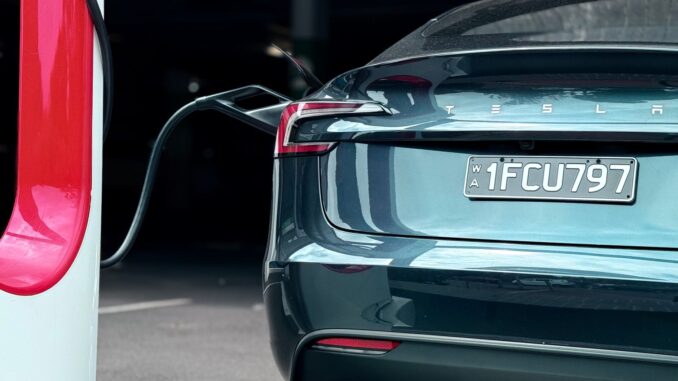
Photo by Sasha Vukovic on Pexels
Fatal Tesla Crash Prompts Federal Investigation
A recent fatal crash involving a Tesla vehicle in Texas has triggered a federal investigation, spotlighting the ongoing debate over the safety and regulation of self-driving technology. On Friday, a Tesla driver reported that he was utilizing the vehicle’s ‘self-driving’ capabilities when the car accelerated uncontrollably into a residential home, resulting in the death of a woman inside. This incident is now under scrutiny by the National Highway Traffic Safety Administration (NHTSA), which has been increasingly vigilant about the safety implications of autonomous vehicle technologies.
The crash underscores significant concerns about Tesla’s Autopilot and Full Self-Driving (FSD) systems, which have been the subject of both regulatory interest and public debate. The company’s aggressive marketing of its technology as ‘self-driving’ has drawn criticism from experts who argue that such terminology can mislead consumers into overestimating the capabilities of these systems. As the NHTSA steps in to investigate, the case could potentially influence future regulatory approaches to autonomous vehicles in the United States.
The Complex Landscape of Self-Driving Regulation
Regulation of self-driving vehicles in the United States remains a patchwork, with federal and state jurisdictions often overlapping or conflicting. The federal government, primarily through the NHTSA, sets vehicle safety standards, while states regulate the operation of vehicles on their roads. This duality has created a complex regulatory environment, where the rapid pace of technological advancement often outstrips legislative and regulatory frameworks.
Tesla’s Autopilot and FSD systems are classified as Level 2 automation according to the Society of Automotive Engineers’ standards. This means that the vehicle can control both steering and acceleration but requires human supervision at all times. Despite this, there’s an ongoing debate about whether existing regulations are sufficient to address the unique challenges posed by semi-autonomous driving systems. The current investigation could provide insights into whether more stringent federal oversight or new regulatory frameworks are necessary.
Impact on Everyday Americans: Safety and Trust
The implications of this crash extend beyond regulatory discussions, affecting public trust and the day-to-day experiences of American drivers. For many, the promise of self-driving technology is freedom from the tedium and hazards of everyday driving. However, incidents like the Texas crash inject uncertainty into the perceived safety of these systems.
Consumer trust in self-driving technology is crucial for its widespread adoption. Surveys have consistently shown that while there is immense interest in autonomous vehicles, safety remains the top concern for potential users. The outcome of the federal investigation could either bolster confidence by leading to improved safety measures or further erode trust if systemic flaws are revealed.
Diverse Reactions from Stakeholders
The Tesla crash has elicited a range of responses from various stakeholders. Safety advocates argue that the incident highlights the need for stricter regulation and oversight of autonomous vehicle technologies. Organizations such as the National Safety Council have called for more transparency and accountability from automakers, particularly those marketing systems that are not yet fully autonomous.
On the other hand, proponents of self-driving technology, including some industry groups and tech enthusiasts, caution against overregulation that might stifle innovation. They argue that while incidents are tragic, they should not overshadow the potential benefits of autonomous vehicles, which include reduced traffic fatalities and increased mobility for those unable to drive.
Tesla, meanwhile, has defended its technology, emphasizing that when used correctly, its systems improve safety. The company has stated that its vehicles have logged millions of miles with Autopilot engaged, arguing that the technology’s overall safety record supports its continued deployment and development.
What Lies Ahead: The Future of Autonomous Driving
The investigation into the Tesla crash represents a pivotal moment for the future of autonomous vehicles in the United States. Depending on the findings, there could be significant implications for how self-driving technologies are regulated and perceived by the public. As the NHTSA examines the specifics of the incident, including the role of Tesla’s technology, the case could set precedents for future regulatory actions.
Looking ahead, the challenge will be to balance innovation with safety concerns. As technology continues to evolve, so too must the regulatory frameworks that govern it. This incident may accelerate efforts to establish clearer safety standards and more robust testing and validation processes for self-driving systems.
Ultimately, the goal is to ensure that the benefits of autonomous driving—such as improved safety, efficiency, and accessibility—are realized without compromising public safety. The outcome of this investigation will likely influence the direction of both policy and public opinion in the coming years, shaping the trajectory of autonomous vehicle deployment across the nation.
Editorial Note: This article was produced with AI assistance
and reviewed by the Celloraa editorial team for accuracy and clarity.
It is intended for informational purposes only.
Read our Editorial Policy.
Leave a Reply