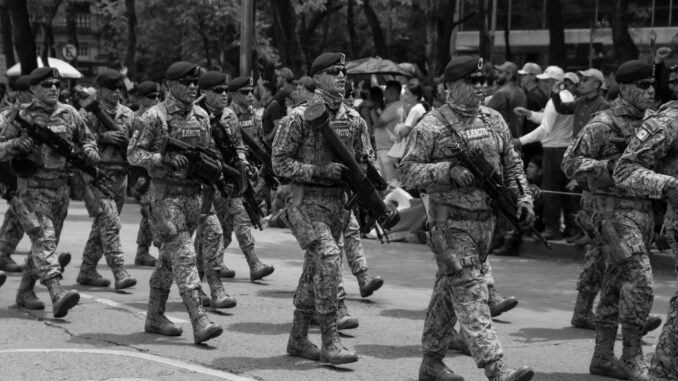
Photo by Anya Juárez Tenorio on Pexels
Escalating Tensions in a Volatile Region
The recent killing of two individuals by Israeli troops in southern Lebanon marks a troubling spike in the ongoing tensions between Israel and Hezbollah, the Iran-backed militant group. This incident, occurring after a brief lull in hostilities, underscores the fragile nature of the ceasefire that has periodically been brokered but seldom fully observed in this volatile region. The Israeli military’s assertion that the deceased were Hezbollah operatives adds a layer of complexity, as Hezbollah has accused Israel of violating the ceasefire terms. This event is a microcosm of the broader geopolitical struggle that has long defined the Middle East.
Historically, the Israeli-Lebanese border has been a flashpoint for conflict, with Hezbollah’s presence in southern Lebanon acting as both a military and ideological challenge to Israeli security. The geopolitical landscape is further complicated by Iran’s support for Hezbollah, which serves as a proxy battleground in the larger Iranian-Israeli confrontation. This nexus of interests ensures that any skirmish, however small, has the potential to escalate into a wider conflict, drawing in regional players and global powers alike.
In the context of the Middle East, where alliances are both fluid and deeply rooted in historical grievances, the recent incident is not merely a bilateral issue but a piece of a much larger puzzle. Understanding the motivations and objectives of each stakeholder is essential for comprehending the broader implications of these developments.
Historical Context: A Cycle of Conflict
The history of Israeli-Hezbollah confrontations is marked by cycles of conflict and uneasy truces. The most significant of these was the 2006 Lebanon War, a month-long conflict that caused significant casualties and infrastructure damage on both sides. Initiated by a Hezbollah cross-border raid that killed and captured Israeli soldiers, the war highlighted the limits of military engagement and the persistent threat posed by Hezbollah’s missile arsenal to Israeli civilian centers.
During the 2006 conflict, the international community, including the United Nations, played a pivotal role in brokering a ceasefire through Resolution 1701. This resolution aimed to disarm Hezbollah and ensure Lebanese sovereignty over its territory, a goal that remains unfulfilled to this day. The recent clash is reminiscent of the prelude to the 2006 war, where small-scale skirmishes spiraled into a full-blown conflict, suggesting the potential for history to repeat itself if diplomatic efforts are not renewed.
Moreover, the cyclical nature of these conflicts underscores the challenges in achieving a lasting peace. Each round of violence leaves behind deep-seated animosities and a reconstruction burden that impedes the socio-economic development of Lebanon, while also affecting Israel’s security calculus.
Key Players and Their Interests
The current scenario involves several key players, each with distinct yet intertwined interests. Israel, under its current government, has prioritized national security and seeks to deter Hezbollah’s military capabilities. The Israeli Defense Forces (IDF) have consistently engaged in preemptive strikes to neutralize perceived threats, a strategy that sometimes leads to immediate escalations.
On the other hand, Hezbollah’s role as a state within a state in Lebanon allows it to operate with considerable autonomy, supported by Iran. For Iran, Hezbollah serves as a strategic deterrent against Israel, projecting Iranian influence in the Eastern Mediterranean. This relationship is a critical component of Iran’s broader regional ambitions, aiming to counterbalance Saudi and Israeli influences.
Lebanon, meanwhile, finds itself in a precarious position. The Lebanese government, grappling with economic crises and political instability, has limited capacity to exert control over Hezbollah. This inability exacerbates the tension with Israel and complicates international diplomatic efforts aimed at stabilizing the region.
Global and Regional Implications
The implications of renewed hostilities between Israel and Hezbollah extend beyond the immediate geographic confines. Regionally, the conflict could destabilize neighboring countries, particularly Syria, which is still recovering from its own civil war. The engagement of Iran and Israel in proxy battles across the region also risks drawing in other regional powers, such as Saudi Arabia, further complicating Middle Eastern geopolitics.
Globally, the situation demands the attention of major powers such as the United States and Russia. Historically, both nations have played roles in Middle Eastern diplomacy, albeit with divergent interests. The U.S. has traditionally supported Israel’s security concerns, while Russia has maintained alliances with both Iran and Syria, thereby influencing Hezbollah’s strategic calculations.
Furthermore, the international community’s response—or lack thereof—could set precedents for other global conflicts. An effective diplomatic intervention could reinforce international frameworks for conflict resolution, whereas failure to address the situation might encourage other state and non-state actors to pursue aggressive policies in their regions.
What Informed Observers Should Watch Next
As tensions simmer, informed observers will be keenly watching for several key developments. Firstly, any change in U.S. foreign policy, particularly under its current administration, could significantly alter the dynamics at play. The U.S. has a vested interest in maintaining regional stability, and its diplomatic and military strategies could either exacerbate or alleviate tensions.
Additionally, the upcoming negotiations, if any, between Lebanon and Israel, possibly mediated by international actors, will be crucial in either defusing or escalating the situation. The role of the United Nations and other international bodies in enforcing or revisiting previous resolutions will also be pivotal.
Lastly, the internal political landscapes of both Israel and Lebanon are worth monitoring. In Israel, electoral politics and coalition dynamics may influence military strategies, while in Lebanon, the government’s ability to address Hezbollah’s autonomy amidst economic hardship will be critical.
The more significant development here is the potential for a broader regional realignment. Should the current skirmishes escalate, the Middle East may witness a reshuffling of alliances, with long-term implications for global peace and security.
Editorial Note: This article was produced with AI assistance and reviewed by the Celloraa editorial team for accuracy and clarity.
It is intended for informational purposes only.
Read our Editorial Policy.
Leave a Reply