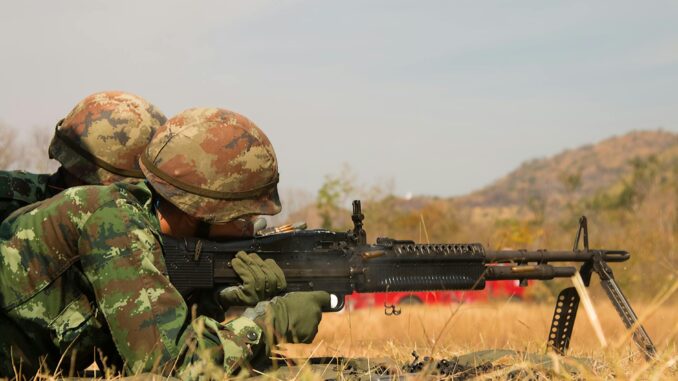
Photo by Somchai Kongkamsri on Pexels
A Fragile Ceasefire Under Strain: Second Wave of US Strikes on Iran
On May 28, 2026, the United States launched military strikes against Iranian targets for the second time in just three days, testing the limits of a ceasefire designed to create space for diplomacy. The operations come exactly three months into a war that has already cost hundreds of lives, disrupted global energy markets, and drawn in regional proxies. With negotiations taking place behind closed doors—reportedly mediated through Swiss channels—the renewed use of force raises fundamental questions about whether the two sides can find a path to de-escalation or are sliding toward a broader conflagration.
The Strategic Context: Three Months of Hostilities
The conflict between Washington and Tehran erupted in late February 2026 after a series of tit-for-tat attacks spiraled into open warfare. Over the following three months, the United States conducted airstrikes against Iranian Revolutionary Guard Corps (IRGC) positions in Iran and Iraq, while Iran retaliated with missile and drone attacks on U.S. bases in the Persian Gulf region and allied shipping. The fighting has been characterized by both sides avoiding a ground invasion but leveraging air power, naval assets, and asymmetric tactics.
The temporary ceasefire, agreed to in mid-May, was intended to freeze frontline combat and allow negotiators in Geneva and Oman to hash out a framework for a longer-term truce. However, ceasefires in such high-stakes conflicts are notoriously fragile—often violated by both sides to improve bargaining positions. The U.S. justification for the latest strikes, as outlined in official statements, points to “imminent threats” from Iranian military installations, though specific evidence has not been released publicly. This pattern mirrors previous U.S.-Iran standoffs, such as the 2020 killing of Qasem Soleimani, where strikes were framed as preemptive but risked escalation.
Details of the May 28 Strikes: Targets and Timing
According to Pentagon officials speaking on condition of anonymity, the May 28 strikes targeted a cluster of Iranian air-defense systems and missile storage facilities in Khuzestan province, near the Iraqi border. Unlike the first wave on May 26, which focused on naval assets in the Strait of Hormuz, these operations appear designed to degrade Iran’s ability to defend its nuclear and military sites. The choice of targets suggests a U.S. strategy of “calibrated escalation”—hitting military infrastructure without causing mass civilian casualties, which could trigger a broader international backlash.
The timing is also significant. The strikes occurred just hours after Iranian negotiators in Muscat presented a counter-proposal that included demands for the lifting of all oil sanctions. By striking now, Washington may be signaling that it will not negotiate under the threat of Iranian military pressure—while also trying to demonstrate strength ahead of domestic political cycles. However, the decision to strike while talks are still ongoing carries inherent risks: it can harden Iranian positions and push Tehran to retaliate in ways that rupture the ceasefire entirely.
Diplomatic Negotiations in Jeopardy
The fragility of the ceasefire is nowhere more evident than in the parallel diplomatic track. Talks mediated by Switzerland and Oman have been ongoing for weeks, but progress has been slow. Key sticking points include the scope of uranium enrichment at Iran’s Fordow facility, U.S. demands for a halt to Iranian drone exports to Russia, and the status of proxy groups in Yemen and Syria. The latest strikes inject a new element of mistrust: Iran’s foreign ministry called the attacks a violation of the ceasefire agreement, while U.S. officials argue they fall short of triggering the ceasefire’s mutual cessation clauses, which cover only “direct combat operations.”
This legalistic interpretation does little to reassure observers.
As Celloraa reported earlier this week, US-Iran tensions flare amid Swiss negotiations, with key stakeholders—including European Union mediators and Gulf Arab states—deeply frustrated by the lack of transparency. The May 28 strikes may further alienate these intermediaries, who had hoped that a ceasefire would provide enough stability for a comprehensive deal. If negotiations collapse, the region could face an open-ended conflict with no off-ramp.
International Reactions: Condemnation and Support
Global reactions to the latest escalation have been predictably divided. The United Nations Secretary-General called for “utmost restraint,” warning that the ceasefire was already “hanging by a thread.” European allies, including France and Germany, issued statements urging both sides to return to the negotiating table immediately, while Russia and China condemned the U.S. actions as a violation of Iranian sovereignty. In the Middle East, Saudi Arabia and the United Arab Emirates have publicly advocated for de-escalation, but privately worry about the impact of continued instability on oil flows and the safety of their own critical infrastructure.
Iran’s supreme leader issued a statement vowing “a response that will make the enemy regret its adventurism,” though he stopped short of specifying the nature of retaliation. Analysts suggest that Iran may opt for asymmetric retaliation—such as cyberattacks on Saudi Aramco facilities or strikes on Israeli targets—rather than direct military confrontation with the U.S. Navy. The risk of miscalculation is high: a single mistaken attack on a civilian airliner or a chemical facility could spiral out of control.
Economic Ripples: Oil, Markets, and Global Stability
The economic implications of renewed US-Iran hostilities are immediate and far-reaching. Global oil markets—already volatile due to the conflict—spiked more than 4% in after-hours trading following news of the May 28 strikes, pushing Brent crude above $95 per barrel. The Strait of Hormuz, through which roughly 20% of the world’s oil passes, remains a flashpoint: any disruption there could send prices soaring to levels not seen since the 1970s oil crisis.
Market analysts are particularly concerned about the compounding effect of multiple regional crises.
Ukraine’s targeting of Crimea oil infrastructure has already sparked a regional fuel crisis, straining global supply chains further. If Iran responds by targeting U.S. allies’ oil fields in the Gulf, or if the IRGC Navy lays mines in the Strait, the economic fallout could hurt consumers worldwide—from European drivers to Asian manufacturers. Central banks already grappling with inflation may face renewed pressure, potentially delaying interest rate cuts that markets have been pricing in.
Beyond oil, the conflict threatens broader economic stability. Insurance premiums for shipping in the Persian Gulf have surged, while foreign investors are pulling capital from emerging markets in the Middle East. The U.S. defense sector, meanwhile, has seen stock gains as investors anticipate prolonged military spending. For ordinary citizens in Iran, the cost of essential goods—imported medicine, food, fuel—has risen sharply, exacerbating a humanitarian crisis that the ceasefire had briefly alleviated.
The Risk of Full-Scale Escalation: Pathways to a Wider War
The most dangerous scenario is a miscalculated retaliation that draws in Iran’s regional proxies—Hezbollah in Lebanon, the Houthis in Yemen, and Shia militias in Iraq—transforming a bilateral conflict into a regional one. The U.S. has bolstered its naval presence in the Persian Gulf with additional destroyers and a Marine expeditionary unit, signaling readiness for a wider fight. Iran, for its part, has moved short-range ballistic missiles into launch positions near its coast.
History offers cautionary lessons. The 1980–1988 Iran-Iraq war demonstrated how limited strikes can escalate into years of ruinous conflict. Today’s high-end weapons—precision missiles, drones, cyberweapons—make the potential for rapid escalation even greater. A single attack on a desalination plant or an oil terminal could trigger humanitarian and economic crises that destabilize entire regions. For more on how targeted strikes are evolving in gray-zone conflicts, see Celloraa’s analysis:
Widening the Target: Why Israel’s Claim About a Slain Journalist Marks a Shift in Gaza Strikes—which explores the unintended consequences of preventive targeting.
What This Means for the Region and Beyond
The U.S. strikes against Iran on May 28 mark a precarious moment. They demonstrate that the superpower is unwilling to accept the status quo of a frozen ceasefire that leaves Iran’s military infrastructure intact—but they also risk sabotaging the very negotiations that could end the war. For investors, the message is clear: hedge against oil volatility and watch for retaliatory actions. For policymakers in Europe and the Gulf, the challenge is to keep dialogue alive even as bombs fall. For ordinary people in Iran and the Middle East, the hope for a lasting peace remains distant.
The situation is fluid. Whether this is a temporary escalation before a return to talks, or the beginning of a deeper conflict, will depend on choices made in Washington and Tehran in the coming days. As
the Council on Foreign Relations notes in its backgrounder on US-Iran tensions, the two rivals have a long history of brinkmanship, but the stakes today are higher than ever—with global energy markets, regional stability, and the lives of millions in the balance.
Editorial Note: This article was produced with AI assistance and reviewed by the Celloraa editorial team for accuracy and clarity. It is intended for informational purposes only.
Read our Editorial Policy.
Leave a Reply