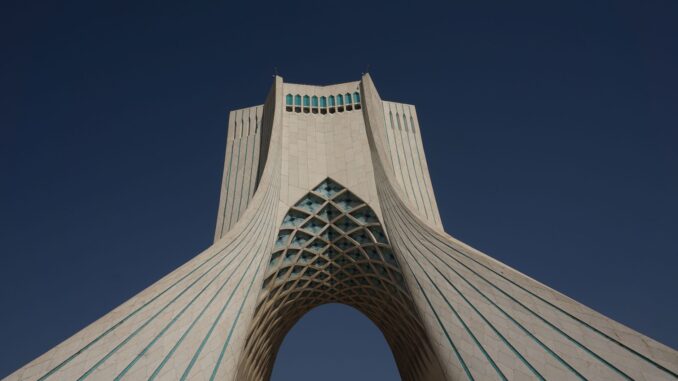
Photo by Emir Kenter on Pexels
In a rapidly escalating conflict that threatens regional stability, Tehran has launched attacks on US military bases in the Gulf following American airstrikes targeting Iranian positions. This latest exchange underscores the fragile balance of power in the Middle East and highlights the intricate web of geopolitical interests at play.
Competing Interests: US-Iran Power Struggle
The roots of the current confrontation can be traced to a long-standing power struggle between the United States and Iran. For decades, the US has sought to curtail Iranian influence in the Middle East, often viewing Tehran’s regional ambitions as destabilizing. Conversely, Iran perceives American military presence in the Gulf as a direct threat to its sovereignty and regional hegemony. This cyclical pattern of provocation and retaliation has become a defining feature of US-Iran relations.
Central to this struggle are the strategic waterways of the Gulf, through which a significant portion of the world’s oil supply passes. Control and influence over this region are seen as vital by both nations. While the US asserts its right to ensure free passage and protect its allies, Iran views its actions as defensive, aimed at countering perceived encroachments on its sphere of influence.
Recent Developments: A Chronology of Escalation
The latest round of hostilities began when US Central Command announced strikes on Iranian targets, framing them as a response to “unwarranted and continued aggression” from Tehran. This escalation was not an isolated incident but rather the culmination of months of increasing tensions, marked by skirmishes and accusations from both sides.
In retaliation, Iran targeted US military bases in the Gulf, signaling its readiness to escalate the conflict further. This response was expected by many analysts, given Iran’s pattern of responding to perceived threats with demonstrative force. The attacks have raised concerns about the potential for broader conflict, with implications not only for US-Iran relations but also for global energy markets and regional stability.
Major Players: Regional and Global Stakes
Beyond the immediate US-Iranian confrontation, several other players have a vested interest in the outcome of this conflict. Gulf states such as Saudi Arabia and the United Arab Emirates, traditional allies of the US, fear increased Iranian influence in the region and support American efforts to curtail Tehran’s reach. Meanwhile, countries like Russia and China, with strategic and economic ties to Iran, view US military presence as a counterbalance to their interests.
On a global scale, the implications of this conflict extend to energy security and the international economy. Any disruption in the Gulf could lead to significant fluctuations in oil prices, impacting global markets. Furthermore, the possibility of a broader military conflict could draw in other nations, potentially leading to a larger geopolitical crisis.
Historical Precedents: Lessons from Past Conflicts
Historically, the Gulf region has been a flashpoint for conflict, with several precedents offering insights into the current situation. The Iran-Iraq War in the 1980s and the US-led interventions in Iraq are reminders of how regional tensions can escalate into full-scale wars. These conflicts have often been fueled by a mix of territorial disputes, ideological differences, and external interventions.
The lessons from these past conflicts highlight the importance of diplomatic engagement and the risks of military escalation. Efforts to resolve the current tensions through dialogue and negotiation, while challenging, could prevent a repeat of history’s costly mistakes.
What Informed Observers Should Watch Next
As the situation unfolds, informed observers will be closely monitoring several key factors. The international community’s response, particularly from the United Nations and major powers like Russia and China, will be critical in shaping the course of events. Additionally, any shifts in the strategic alliances within the Middle East could have significant implications for the balance of power in the region.
Given the complexities of US-Iran relations and the broader geopolitical landscape, the path forward is fraught with uncertainty. However, a resolution will likely require a combination of strategic patience, diplomatic efforts, and a willingness to engage in multilateral dialogue. As tensions simmer, the world watches with bated breath, hoping for a de-escalation that preserves regional stability.
Editorial Note: This article was produced with AI assistance and reviewed by the Celloraa editorial team for accuracy and clarity. It is intended for informational purposes only.
Read our Editorial Policy.
Leave a Reply