
The Looming Social Security Shortfall
Americans are bracing for a potential 22% reduction in Social Security benefits by 2032, a stark reality that has injected urgency into retirement planning conversations. The Social Security Board of Trustees has forecasted that the program’s trust fund reserves could be depleted by this date if no legislative action is taken. This projected shortfall poses a significant risk to retirees who rely on these benefits as a primary source of income.
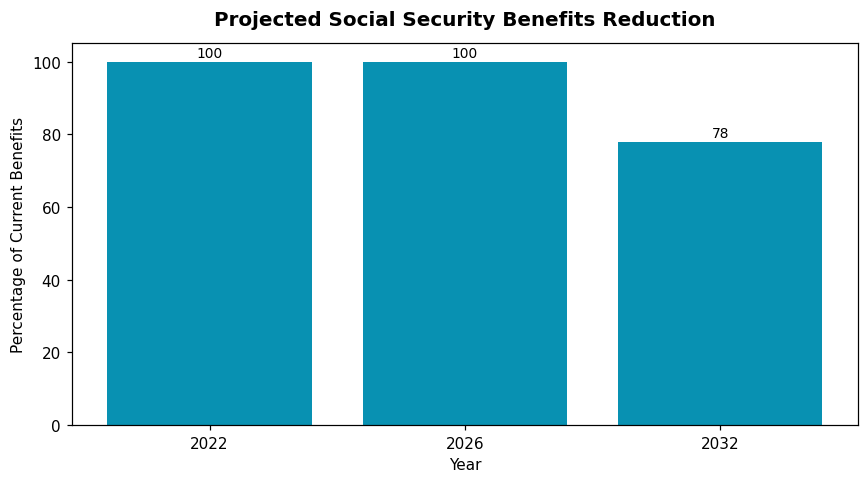
The central tension lies between the political inertia in Washington and the financial security of millions of Americans. While the need for reform is clear, partisan gridlock has stalled meaningful legislative solutions, leaving citizens to grapple with the consequences. The potential cuts have sparked widespread concern, highlighting the need for a bipartisan approach to ensure the program’s sustainability.
The Broader Economic Impact of Social Security Cuts
The implications of a 22% cut extend far beyond individual retirees. Social Security benefits are a crucial economic lifeline, injecting over $1 trillion annually into the U.S. economy. A reduction would not only diminish the purchasing power of millions but also impact businesses that rely on consumer spending. This reduction in benefits could lead to a decrease in disposable income, affecting sectors ranging from retail to healthcare.
Communities with a high concentration of retirees could face significant economic downturns. In places where Social Security constitutes a substantial portion of income, local economies may suffer from reduced spending, affecting everything from grocery stores to healthcare services. This ripple effect underscores the critical role of Social Security as not just a personal benefit but a stabilizing economic force. For instance, a decrease in consumer spending could lead to job losses in affected areas, further exacerbating economic challenges.
Moreover, reduced benefits could increase the demand for public assistance programs, straining state and local resources. This would create a domino effect, potentially leading to higher taxes or reallocation of funds from other critical services. According to the Center on Budget and Policy Priorities, Social Security is vital in reducing poverty among the elderly, and cuts could reverse these gains, increasing financial insecurity for many.
Strategies for Diversifying Retirement Income
In response to the looming cuts, financial advisors are urging individuals to diversify their retirement income streams. Options such as annuities, dividend-paying stocks, and real estate investments are gaining traction as viable alternatives. Annuities offer a steady income flow, while dividend stocks can provide growth and income. Real estate, although requiring a higher initial investment, can yield significant returns through rental income.
These strategies, however, come with their own risks and require careful planning. Annuities may involve high fees, stock dividends can fluctuate, and real estate markets are susceptible to downturns. It’s crucial for individuals to assess their risk tolerance and financial goals when considering these options. Diversification not only provides potential income but also spreads risk across different asset classes, which can be a buffer against economic fluctuations.
Moreover, engaging with a financial advisor to tailor a retirement plan that incorporates these diverse income streams can be invaluable. Balancing growth-oriented investments with safer, income-generating assets can help mitigate the impact of reduced Social Security benefits. For those considering real estate, understanding market trends and potential rental income is essential. Resources like the Investopedia guide on real estate investment can provide valuable insights into this complex asset class.
Societal Shifts and Changing Perspectives on Retirement
Beyond the immediate financial adjustments, the potential Social Security cuts could reshape societal views on aging and retirement. With the prospect of diminished benefits, younger generations might alter their career and savings strategies, prioritizing financial independence over traditional retirement timelines.
This shift could lead to a reevaluation of long-held norms around work and retirement. The gig economy, with its promise of flexible work schedules, may become increasingly attractive as a means to supplement income in later years. Additionally, intergenerational financial support might become more common, as families band together to mitigate the economic impact of reduced benefits.
These changes could also influence how individuals plan for healthcare and long-term care, potentially leading to increased demand for private insurance products. As people work longer, the concept of retirement might evolve to include more part-time work or consulting roles, reflecting a more gradual transition out of the workforce.
Monitoring Legislative Developments and Economic Indicators
As the 2032 deadline approaches, analysts are closely monitoring legislative developments and economic indicators that could influence the trajectory of Social Security. Key areas of focus include potential policy shifts, demographic changes, and economic growth rates, all of which could alter the solvency forecast.
Moreover, the political landscape leading up to the 2028 elections could play a decisive role in shaping Social Security’s future. Potential reforms, such as adjusting the payroll tax cap or altering benefit formulas, are on the table, but their viability hinges on the political will to enact change. The outcome of these political negotiations could significantly impact the program’s sustainability and the future of retirement planning in the U.S.
In this context, keeping abreast of policy discussions and engaging in advocacy can empower individuals to influence outcomes. Organizations like the AARP provide resources and platforms for citizens to stay informed and involved in these critical discussions.
Proactive Planning for an Uncertain Future
Navigating the uncertainty surrounding Social Security requires proactive planning and adaptability. Individuals must remain informed about potential policy changes and continuously evaluate their retirement strategies. While diversifying income streams is a prudent approach, it’s equally important to engage in broader financial planning, considering factors such as healthcare costs and life expectancy.
Ultimately, the best defense against the impending Social Security cuts is a robust financial plan that accounts for multiple scenarios. As the situation evolves, staying informed and flexible will be crucial in securing financial stability in retirement. This includes regularly reviewing and adjusting investment portfolios, exploring insurance options for health and long-term care, and considering the timing of Social Security benefit claims.
The potential reduction in Social Security benefits serves as a stark reminder of the importance of financial literacy and preparedness. By taking proactive steps today, individuals can better navigate the challenges of tomorrow, ensuring a more secure and stable retirement.
Editorial Note: This article was produced with AI assistance and reviewed by the Celloraa editorial team for accuracy and clarity. It is intended for informational purposes only.
Read our Editorial Policy.
Leave a Reply