
Photo by Vlada Karpovich on Pexels
The burgeoning excitement surrounding artificial intelligence (AI) investments has hit a fever pitch, with investors eagerly pouring money into AI-related stocks and sectors. However, Goldman Sachs has issued a cautionary note: investor assumptions about the AI trade may be stretching beyond the current reality. This tension between investor enthusiasm and grounded market realities highlights a critical point of analysis for those looking to understand the future trajectory of AI in the financial markets.
The Rise and Volatility of AI Stock Prices
In recent months, AI stocks have experienced a meteoric rise, with prices surging based on the promise of technological advancements and projected future earnings. Companies specializing in AI solutions, from chipmakers to software developers, have seen their valuations skyrocket. For instance, the stock prices of leading AI firms have doubled or even tripled over the past year, propelled by the narrative that AI is the next frontier of technological revolution.
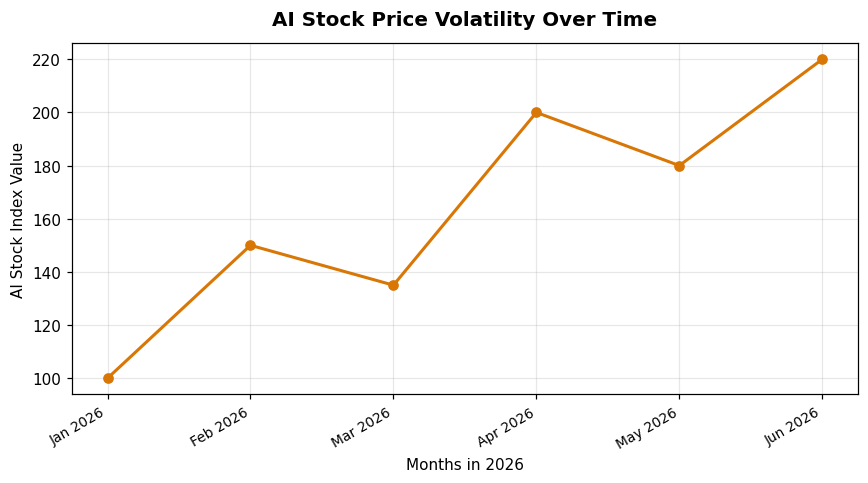
However, this rapid ascent comes with inherent volatility. The market has shown sensitivity to both positive and negative news, leading to sharp fluctuations in stock prices. A single announcement of a breakthrough technology can send shares soaring, just as a regulatory hiccup or a delay in product development can trigger a steep decline. The resulting volatility complicates the landscape for investors, who must navigate the hype while assessing the underlying fundamentals of these companies.
Unpacking the Enthusiasm: What’s Driving the AI Trade?
Several factors are fueling the current AI trade enthusiasm. First and foremost, AI’s transformative potential across industries is hard to ignore. From healthcare and finance to manufacturing and logistics, AI promises efficiency gains, cost reductions, and entirely new business models. This broad applicability has drawn interest from a diverse range of investors, from institutional players to retail traders.
Moreover, the rapid pace of technological advancements in AI, such as the development of generative AI and machine learning models, has captured imaginations. Companies are racing to integrate AI into their operations, promising revolutionary changes that could redefine sectors. The allure of being at the forefront of such a transformation has led to increased investments in AI startups and established tech giants alike.
The Broader Economic Context: Is AI Overhyped?
While the potential of AI is undeniable, Goldman Sachs’ warning underscores a broader economic context where investor exuberance might be outpacing reality. Historically, the financial markets have witnessed similar scenarios where new technologies generate excitement and result in speculative bubbles. The dot-com bubble of the late 1990s serves as a pertinent example, where initial optimism eventually gave way to market corrections.
The current economic climate, marked by rising interest rates and geopolitical uncertainties, adds another layer of complexity. As central banks tighten monetary policies to combat inflation, borrowing costs increase, potentially impacting the funding available for AI research and development. The geopolitical landscape, with ongoing trade tensions and supply chain disruptions, further complicates the outlook for technology companies reliant on global networks.
Concrete Effects on Everyday People
The implications of the AI trade extend beyond the stock market, affecting ordinary people in tangible ways. AI technologies are already reshaping job markets, with automation taking over routine tasks in various sectors. While this leads to increased efficiency, it also raises concerns about job displacement and the need for workforce reskilling.
Moreover, the rise in AI-related investments influences consumer technology products and services. The integration of AI into everyday applications, such as virtual assistants and smart home devices, is becoming more prevalent. This trend has the potential to enhance convenience and connectivity in daily life but also raises questions about data privacy and security in a rapidly digitizing world.
What Analysts Are Watching: Future Directions and Risks
Analysts are closely monitoring several factors that could shape the future trajectory of the AI trade. Regulatory developments are high on the list, as governments grapple with the implications of AI on privacy, ethics, and security. Stricter regulations could impact the pace of AI adoption and the profitability of AI-focused companies.
Additionally, the competitive landscape in AI is evolving, with new entrants challenging established players. Innovations in AI technology and shifts in consumer demand could alter market dynamics, affecting which companies emerge as leaders in the field. Analysts are also keeping an eye on the financial health of AI companies, particularly their ability to sustain growth amid changing economic conditions.
As the AI trade continues to evolve, investors and market participants must balance optimism with caution. While the potential of AI to revolutionize industries is substantial, the current market enthusiasm may not be fully grounded in reality. Navigating this landscape requires a keen understanding of both the opportunities and risks presented by AI, along with a vigilant eye on economic and regulatory developments.
Editorial Note: This article was produced with AI assistance and reviewed by the Celloraa editorial team for accuracy and clarity. It is intended for informational purposes only.
Read our Editorial Policy.
Leave a Reply