Match Overview
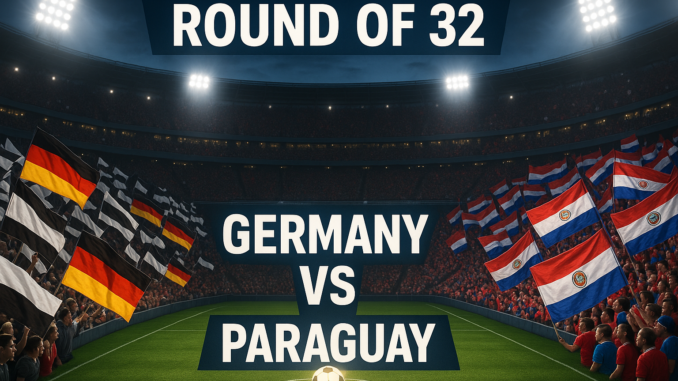
The afternoon sun hangs low over Boston Stadium, casting long shadows across the freshly cut grass as 65,000 fans begin to file in. The air is thick with anticipation and the unmistakable aroma of hot dogs and beer from the concourses. This is the Round of 32 at the World Cup 2026, and the stakes could not be higher. Germany, still carrying the weight of early exits in previous tournaments, meets Paraguay, a side that has made a habit of defying expectations on the biggest stage. The stadium hums with a mix of Polyphonic chants – German oompah rhythms from one section, Paraguayan folk melodies from another – creating a cauldron of noise that will only grow as kickoff approaches. The temperature is expected to hover around 28°C (82°F) with humidity that makes the ball feel a little heavier, a factor both teams have tried to simulate in training. For the neutrals, this is a classic clash of European efficiency against South American grit. For the passionate supporters on both sides, it is a do-or-die 90 minutes that could define a generation. The tunnel lights flicker as the teams line up, and the roar that greets them is deafening.
Head-to-Head History
Germany and Paraguay have crossed paths only a handful of times, but their history carries a specific, sharp memory for fans of a certain age. The most significant meeting came in the Round of 16 at the 2002 World Cup. That day in Seo, South Korea, Oliver Neuville’s late goal – a clever backheel after a deflected cross – sent Germany through 1-0 and eventually to the final. Paraguay had frustrated the Germans for 88 minutes, defending with a discipline that would become their trademark. That match remains the only competitive fixture between the two nations. In friendlies, the ledger is sparse: a 3-3 draw in 1995 and a 2-0 German win in 2004. But the historical narrative is clear: Paraguay has never beaten Germany. Yet the margin of their defeats is narrow. The 2002 encounter was a masterclass in how a well-organized underdog can neutralize a favorite. Germany’s all-time record against South American sides is strong, but Paraguay represents a specific challenge – a team that doesn’t possess the individual flair of Brazil or Argentina but compensates with collective tenacity. Those past meetings hint that this Round of 32 tie will not be a walkover. The ghosts of 2002 linger: if Paraguay can frustrate Germany for 88 minutes again, they know they have a chance to write a different ending.
Current Form & World Ranking
Germany enters this match with a squad in transition but showing clear signs of rejuvenation under the guidance of a pragmatic coach. After the disappointment of group-stage exits in 2018 and 2022, the German Football Association has rebuilt around youth and pace. The team currently sits at 9th in the world rankings, a position that many feel underestimates their potential. Their recent form in qualifiers and Nations League fixtures has been solid if unspectacular: a blend of dominant possession wins against lower-ranked sides and narrow, nervy victories over top-tier opponents. The defence has looked more resolute than in previous years, but the attack sometimes lacks a killer instinct. Paraguay, meanwhile, is ranked 28th. They qualified by finishing fourth in the gruelling South American qualifying marathon, ahead of teams like Chile and Peru. Their form is built on a foundation of defensive resilience – they conceded only 14 goals in 18 qualifiers, a record better than Brazil’s. Offensively, they rely on quick transitions and set pieces. Paraguay’s recent friendly results have been mixed, but they showed their mettle by holding Argentina to a 0-0 draw in Asunción just six months ago. The form guide suggests Germany is the stronger side on paper, but the knockout stage often levels the playing field. Paraguay’s style is tailor-made for a single-elimination match: they are comfortable without the ball and disciplined in structure.
Players to Watch
For Germany, all eyes are on Jamal Musiala. The Bayern Munich playmaker has matured into the team’s creative heartbeat. His low centre of gravity, close control, and ability to glide past defenders make him the primary threat to unlock Paraguay’s deep block. In big tournament matches, Musiala often draws two or three markers, creating space for others. Alongside him, Florian Wirtz provides a secondary creative outlet. The Bayer Leverkusen star has recovered fully from his long injury layoff and is once again delivering incisive passes and long-range strikes. Germany’s striker role is likely filled by Niclas Füllkrug, a poacher with a knack for arriving at the right moment – crucial against a defense that concedes few clean chances. On the Paraguayan side, Miguel Almirón is the talisman. The Newcastle United winger is Paraguay’s most dangerous outlet on the counter. His pace and direct running can stretch even the best defenses. Julio Enciso, the young Brighton forward, has added flair and unpredictability to the attack. He is not afraid to shoot from distance, and his set-piece delivery is a weapon. In defense, Gustavo Gómez of Palmeiras captains the backline with immense physicality and aerial dominance. He will likely be tasked with marshalling Füllkrug. The battle between Gómez and Musiala in the half-spaces could decide the match. Germany also has a wildcard in Kai Havertz, who can play as a false nine or attacking midfielder, but his form has been inconsistent – one moment he produces a Champions League-winning goal, the next he disappears.
Past Upsets & Memorable Moments
The history between these two nations may be brief, but it contains a lesson that Paraguay will cling to. In that 2002 Round of 16 match, Germany was heavily favored. They dominated possession but found Paraguay’s defence impenetrable. The breakthrough came only two minutes from time, and it took a moment of individual brilliance (and a touch of fortune) to break the deadlock. Paraguay left the field feeling they had deserved extra time. That near-miss is part of a broader tapestry of Paraguayan upsets on the world stage. At the 2010 World Cup, they reached the quarter-finals for the first time, eliminating Japan on penalties and pushing eventual champions Spain to the brink before losing 1-0. In 1998, they held Bulgaria and Nigeria to draws and beat Spain. Paraguay’s DNA is built on spoiling the plans of giants. For Germany, the ignominy of being eliminated by South Korea in 2018 and by Japan in 2022 at the group stage remains fresh. They know that underestimating an Asian or South American underdog can be fatal. The 2026 edition, with the expanded format, adds another layer: the Round of 32 introduces a new jeopardy of a single knockout match against a team that has nothing to lose. If any match is set up for a shock, this one fits the profile.
Home & Host Advantage
Boston Stadium, renovated for this tournament, offers a classic New England summer backdrop. The turf is pristine, but the climate is a wildcard. Late June in Boston can bring oppressive humidity and sudden afternoon thunderstorms. The roof is not retractable, so rain could turn the surface slick, favoring the more direct, long-ball approach that Paraguay sometimes employs. The crowd will be a fascinating mix. Boston has a sizeable German-American population, and many have made the trip from Germany itself. Expect a vocal, organized support in white and black. Paraguay, while less numerous, will have passionate pockets, especially from the diaspora communities along the East Coast. For neutral American fans, there is often a soft spot for the underdog, and the energy could tilt toward Paraguay if they stay competitive. The stadium’s design means the noise is trapped, making it a genuine cauldron. Germany, as a top European side, has played in hostile environments before, but they are accustomed to being the crowd favorite. If Paraguay’s early resistance frustrates the German attack, the crowd’s impatience could become a factor. Conversely, a quick German goal would silence the underdog support. The host nation effect is minimal – this is not a home game for either side – but the Boston venue is new to both, and adapting to the pitch dimensions and atmosphere is part of the preparation.
Who Has the Edge?
On paper, Germany has the clear edge. Their individual quality across the pitch, from Musiala to Neuer (or his successor), is superior to Paraguay’s. They have depth: substitutes like Leroy Sané (if fit) or Serge Gnabry can change a game. Their tactical flexibility – ability to switch between a back three and back four – gives the coach options. Paraguay, however, has the edge in intangibles. They are battle-hardened from the South American qualifiers, which are arguably the most gruelling in world football. They know how to suffer and still stay alive. The key battle will be between Germany’s possession-based build-up and Paraguay’s compact 4-4-2 or 4-2-3-1 defensive shape. Germany averages over 60% possession in most matches, but Paraguay is comfortable with 35%. The danger for Germany is overcommitting and leaving space for Almirón and Enciso to counter. The second balls and set pieces are critical areas: Paraguay scores a high percentage of their goals from dead-ball situations, while Germany has historically been vulnerable to aerial threats. The psychological edge may belong to Paraguay – they have no pressure, while Germany faces a nation expecting at least a quarterfinal run. The German coach has stressed patience, but tournament football punishes hesitation. If the match remains 0-0 into the last 20 minutes, Paraguay’s belief will grow exponentially. The edge is slight, but it tilts toward Germany – provided they score early.
Celloraa Prediction
This is the kind of match where nerves and discipline dominate the first hour. Germany will dominate possession but struggle to break through Gómez and his defensive partners. Paraguay will sit deep, absorb pressure, and look for long balls to Almirón’s runs. The breakthrough is likely to come in the second half, when German substitutes inject pace and the Paraguayan legs tire. A set-piece header or a moment of individual brilliance from Musiala will decide it – but the margin will be narrow. Expect Germany to control the game without ever looking completely comfortable. Paraguay will create one or two clear chances; if they take them, an upset is possible. But the German defensive record in the qualifiers – only 8 goals conceded in 10 matches – suggests they can handle the threat. The prediction: a hard-fought 2-0 victory for Germany, with goals from Füllkrug and a late tap-in from a substitute. Paraguay will be left to rue what might have been, but they will exit with pride intact. How do you see this one playing out? Will Paraguay’s stubborn defence hold out for extra time, or can Germany’s young stars get the job done inside 90 minutes? Predict the score in the comments below!
Join the Road to the Cup 2026 Conversation
Think you know how this one ends? Share your score prediction in the comments on our social channels and join thousands of fans in the Road to the Cup 2026 discussion!
Follow Celloraa News on Facebook, Instagram, Threads and YouTube for full World Cup 2026 coverage.
Leave a Reply