
AMD’s Unexpected Leap in Market Value
In a move that defies previous expectations, Advanced Micro Devices (AMD) has surged to a valuation nearing $900 billion, surpassing the market cap of financial titan JPMorgan Chase. This development comes at a time when market analysts were predominantly focused on the semiconductor industry’s challenges, such as supply chain disruptions and competition with industry heavyweights like Intel and Nvidia. The real surprise here is not just the sheer scale of AMD’s market cap but the underlying technological advancements propelling this growth.
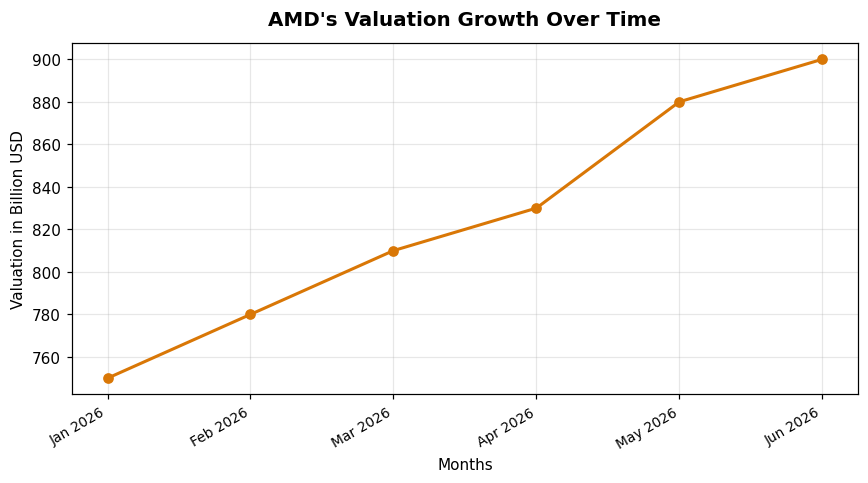
Traditionally, AMD has been seen as a contender in the shadow of larger rivals. However, recent strategic investments in memory technology have catapulted the company into a new echelon of market influence. This shift signals a broader trend where tech companies are redefining their roles and capabilities, challenging historical norms of market dominance.
Memory Technology: The Core of AMD’s Ascent
The crux of AMD’s recent valuation leap lies in its advancements in memory technology. This area has been a critical focus for AMD, as memory chips are essential for enhancing performance across various computing applications. By developing more efficient memory solutions, AMD has positioned itself to meet the growing demands for high-performance computing, particularly in data centers and gaming sectors.
AMD’s approach to memory technology involves integrating innovative designs that significantly boost speed and efficiency. These advancements are crucial in a market increasingly reliant on data-intensive applications. This technological edge not only provides AMD with a competitive advantage but also allows it to capture a larger share of the market. For more insights into market shifts, see our article on SpaceX Surpasses Amazon: A Market Surge with Historic Implications.
Economic Context: Navigating Opportunities and Challenges
AMD’s rise occurs within a complex economic backdrop where tech companies are navigating both opportunities and headwinds. While global semiconductor shortages have presented challenges, they have also underscored the importance of companies like AMD that can innovate and adapt quickly. The economic environment is one where technological prowess can translate directly into financial success, as evidenced by AMD’s impressive market performance.
The digital transformation across industries has accelerated the demand for advanced computing solutions. As businesses and consumers increasingly rely on technology for everyday operations and entertainment, companies that supply the necessary hardware are seeing substantial growth opportunities. AMD’s strategic focus on memory technology aligns perfectly with these macroeconomic trends, positioning it as a key player in the ongoing digital revolution. According to TechRadar, AMD’s investments in next-gen memory solutions are pivotal in maintaining its competitive edge.
Consumer Benefits and Societal Impacts
For ordinary consumers, AMD’s advancements in memory technology translate to faster, more reliable computing experiences. This is particularly relevant in gaming, where AMD’s chips are known for delivering superior graphics and performance. As AMD continues to innovate, consumers can expect even more immersive and seamless digital experiences.
On a societal level, AMD’s growth signals a shift in how technology companies contribute to economic development. By driving innovation, AMD not only creates high-paying tech jobs but also stimulates demand for related industries such as software development and digital services. This ripple effect highlights the broader significance of AMD’s ascent beyond mere financial metrics.
Future Prospects and Strategic Directions
Looking forward, analysts are keenly observing how AMD will leverage its technological advancements to sustain its market momentum. Key areas of interest include potential strategic partnerships and expansions into new markets. The company’s ability to maintain its competitive edge in the face of emerging technologies and new entrants will be critical.
Additionally, investors and analysts alike are watching for AMD’s moves in the artificial intelligence space. With AI applications demanding even more sophisticated computing power, AMD’s memory technology could play a pivotal role in meeting these needs. As the tech landscape continues to evolve, AMD’s strategic decisions will likely have significant implications for its long-term valuation and influence. For further reading on market dynamics, explore our piece on SpaceX Options Debut Sets Historic Market Milestones.
Editorial Note: This article was produced with AI assistance and reviewed by the Celloraa editorial team for accuracy and clarity. It is intended for informational purposes only.
Read our Editorial Policy.
Leave a Reply