
Photo by Leeloo The First on Pexels
Social Security, the bedrock of American retirement security, finds itself in a precarious position. Looming insolvency threatens the program’s ability to deliver on its promises, setting the stage for a clash of interests between political leaders, economic realities, and the American public’s expectations. Much like the early 1980s, when a similar crisis prompted a rare bipartisan effort to save Social Security, today calls are growing for another ‘Greenspan Commission’ to navigate these treacherous waters.
The Financial Quagmire: What Has Changed?
In recent years, Social Security’s financial outlook has been increasingly bleak. The Social Security Trust Fund, which supports retirement and disability benefits, is projected to be depleted by the mid-2030s if no legislative action is taken. This depletion could lead to an automatic reduction in benefits, affecting millions of Americans who rely on these payments as their primary source of income.
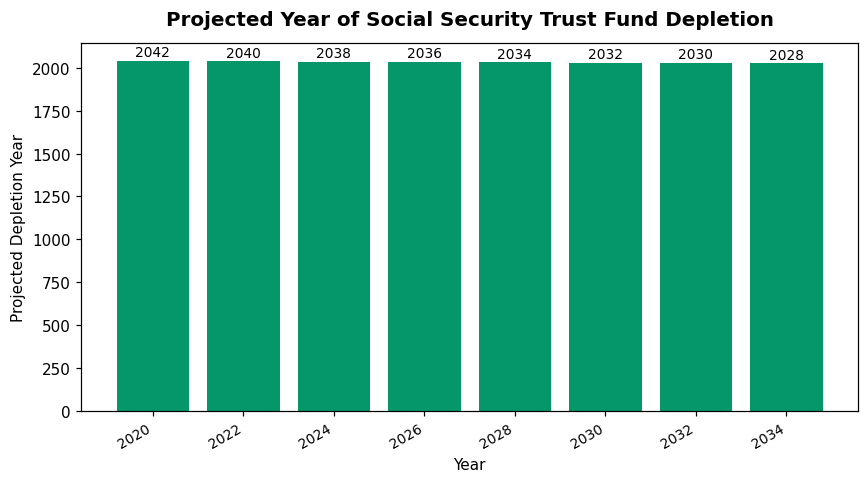
Several factors contribute to this dire scenario. An aging population means more beneficiaries relative to the number of workers contributing to the system. This demographic shift is compounded by longer life expectancies, which increase the duration over which beneficiaries receive payments. Furthermore, economic factors such as wage growth and employment rates have not consistently kept pace with the demands on the system, exacerbating the shortfall.
The Greenspan Commission: A Historical Blueprint
In the early 1980s, Social Security faced a similar crisis, with projections indicating imminent insolvency. The response was the establishment of the National Commission on Social Security Reform, led by Alan Greenspan. This bipartisan body was tasked with crafting recommendations to secure the program’s financial future. The commission’s work culminated in the 1983 Social Security Amendments, which included a mix of tax increases, benefit adjustments, and gradual increases in the retirement age.
The success of the Greenspan Commission lay in its ability to forge consensus across political lines. It demonstrated that with political will and bipartisan cooperation, even deeply entrenched issues could be addressed effectively. The measures implemented not only averted the immediate crisis but also strengthened the program for decades.
The Broader Economic Context: Challenges and Opportunities
Today’s economic landscape differs significantly from that of the 1980s. The gig economy and shifts in employment patterns present new challenges for Social Security’s funding mechanism, which relies heavily on payroll taxes. Additionally, income inequality and wage stagnation have placed further stress on the system.
However, these challenges also present opportunities for innovative reforms. For instance, expanding the taxable income cap could increase revenues, while adjusting benefits to better align with contemporary economic realities might enhance the program’s sustainability. Moreover, leveraging technological advancements could improve the efficiency of benefit delivery and administration.
Impact on Everyday Americans: The Real-Life Stakes
The implications of Social Security’s financial troubles extend far beyond abstract policy debates. For many Americans, particularly those in lower-income brackets, Social Security benefits are a lifeline. A reduction in benefits could push millions into poverty, exacerbating social and economic inequalities.
Moreover, the uncertainty surrounding Social Security’s future affects not only current retirees but also younger generations planning for retirement. The prospect of diminished benefits may force many to reconsider their retirement savings strategies, potentially increasing reliance on personal savings and private retirement accounts.
What Analysts Are Watching: A Path Forward
As the call for a new commission grows louder, analysts are keenly observing several potential developments. Key among these is the political landscape, as bipartisan support is crucial for any meaningful reform. Additionally, economic indicators such as employment rates, wage growth, and demographic trends will play a significant role in shaping policy options.
There is also interest in how public sentiment might influence the debate. Recent surveys suggest strong public support for preserving Social Security, indicating that policymakers may face significant pressure to act decisively. How this pressure translates into legislative action remains to be seen, but it underscores the urgency of addressing the issue.
The need for a new ‘Greenspan Commission’ is not just about averting a fiscal crisis; it is about reaffirming a social contract with the American people. As the conversation evolves, the lessons from the past provide a valuable guide. The original Greenspan Commission showed that with commitment and vision, even the most daunting challenges can be overcome. The question now is whether today’s leaders can rise to the occasion and ensure the long-term viability of Social Security for future generations.
Editorial Note: This article was produced with AI assistance and reviewed by the Celloraa editorial team for accuracy and clarity. It is intended for informational purposes only.
Read our Editorial Policy.
Leave a Reply