
Photo by Travelling Tourist on Pexels
Germany’s Ambitious Retirement Age Plan
Germany’s proposal to gradually increase its retirement age to 70 by 2092 has sparked a global conversation on the sustainability of pension systems. This move is part of a strategic response to demographic changes, particularly the aging population and declining birth rates, which threaten the fiscal viability of social security systems. The German government argues that extending the working life is essential to offset the financial burden on its pension system.
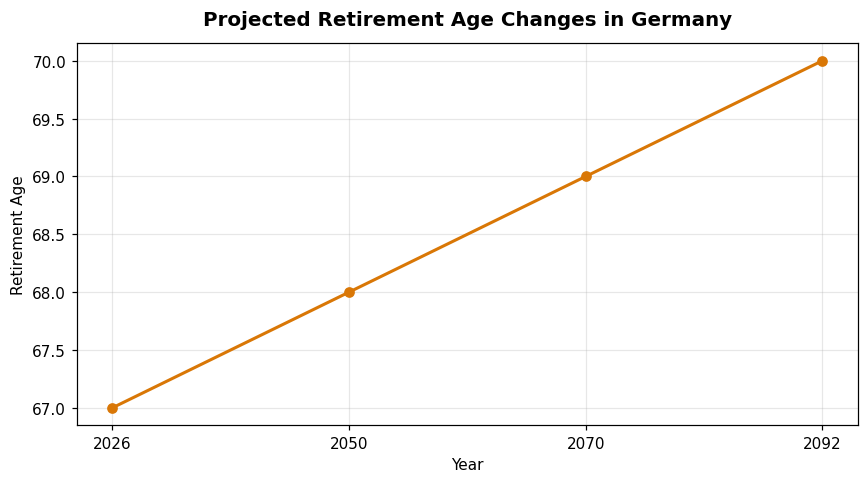
Germany’s initiative sheds light on a broader trend where developed nations are grappling with similar demographic challenges. The country’s decision is not merely about the numbers; it’s a reflection of the pressing need to balance fiscal sustainability with social welfare. By 2092, the expectation is that the working population will have to support a significantly larger retired community, necessitating such policy adjustments.
The Potential U.S. Trajectory
The United States, while not yet committed to a similar course, faces comparable demographic and fiscal challenges that could make a retirement age increase a viable consideration. The U.S. Social Security system is projected to deplete its reserves by the mid-2030s if no reforms are implemented. Similar to Germany, the U.S. is experiencing an increase in life expectancy coupled with a declining birth rate, which strains the social security apparatus.
Unlike Germany, the U.S. political landscape is characterized by significant polarization, complicating potential reforms. Policymakers must navigate a complex web of economic, cultural, and political factors to reach a consensus. The resistance to change is often rooted in concerns over the fairness and feasibility of expecting older individuals to remain in the workforce longer.
Economic Context and Demographic Shifts
Both Germany and the U.S. are experiencing demographic shifts that are crucial to understanding the context of these retirement age discussions. In Germany, the fertility rate has hovered below replacement level for decades, while the U.S. has seen a similar trend more recently. This demographic shift implies fewer workers are supporting more retirees, an unsustainable formula for social security systems.
The economic implications are significant. A higher retirement age could alleviate some fiscal pressure by extending individuals’ contributions to the pension system and shortening the period during which benefits are collected. However, this approach does not address all underlying issues, such as wage stagnation and job availability for older workers. The economic context requires a holistic view that includes job retraining programs and health care considerations to ensure that older workers can remain productive.
Impact on Ordinary People
For ordinary citizens, the prospect of a raised retirement age is double-edged. On one hand, it promises a more stable pension system for future generations. On the other, it demands a longer working life, which can be daunting for those in physically demanding jobs or facing health issues. For many, the notion of retiring at 70 is impractical, highlighting the need for flexible policies that consider varied career paths and health circumstances.
The socioeconomic divide is also a critical factor. Those in higher-income brackets or less physically demanding professions might cope better with extended work years, while others, particularly those in manual labor, might find it challenging. This discrepancy could exacerbate existing inequalities unless mitigated by targeted policy interventions such as job retraining and health support systems.
What Analysts Are Watching
Analysts are closely monitoring the evolving discussions in the U.S. regarding possible reforms to its social security system. Key considerations include the political feasibility of raising the retirement age and the potential socioeconomic impacts. There is also a focus on alternative measures such as adjusting the social security tax cap, which could provide additional funding without altering retirement age expectations.
Beyond fiscal measures, the role of technology and automation in the workforce is under scrutiny. As jobs evolve, there may be opportunities to redefine what retirement looks like, possibly incorporating phased retirements or part-time work options for older employees. These innovations could offer a more adaptable framework for addressing the challenges posed by demographic changes.
As the debate unfolds, it is clear that any decision regarding the retirement age must be part of a broader strategy that considers economic realities, demographic trends, and the diverse needs of the workforce. Policy decisions made today will resonate for decades, shaping the financial and social fabric of future generations.
Editorial Note: This article was produced with AI assistance and reviewed by the Celloraa editorial team for accuracy and clarity. It is intended for informational purposes only.
Read our Editorial Policy.
Leave a Reply