
Understanding the Semiconductor Sector’s Volatility
The semiconductor industry is no stranger to volatility. Recent history has shown that sharp, sudden declines in semiconductor stocks can alarm investors, yet these downturns are often short-lived. On Tuesday, semiconductor stocks faced another significant dip, adding to the list of similar occurrences over the past 15 years. These drops, while unsettling, need a closer examination to understand their fleeting nature and the underlying market forces at play.
Semiconductors are integral to a multitude of industries, powering everything from smartphones to cars. This sector’s growth is closely linked to global technological advancements and economic health. However, its cyclical nature often subjects it to rapid shifts based on demand fluctuations, supply chain disruptions, and geopolitical tensions. Despite these challenges, the recovery pattern following sudden declines in semiconductor stocks suggests a resilience anchored in the industry’s foundational role in modern technology.
The Mechanics Behind Stock Price Fluctuations
One might wonder why semiconductor stocks experience such pronounced volatility. A major factor is the industry’s sensitivity to demand-supply mismatches. When demand projections falter or supply chain issues arise, investor sentiment can quickly sour, leading to sell-offs. However, these reactions are often overblown, driven by short-term fears rather than long-term fundamentals.
Another crucial element is the pace of technological innovation. Semiconductor companies are perpetually engaged in a race to produce faster, smaller, and more efficient chips. This constant innovation cycle makes the industry susceptible to abrupt shifts based on technological breakthroughs or setbacks. For instance, a delay in the rollout of a new chip can trigger a swift negative market reaction. Yet, these are often temporary setbacks, as the underlying demand for cutting-edge technology remains robust.
Historical Patterns of Rapid Recovery
Examining past instances of semiconductor stock plunges reveals a consistent pattern: what goes down often comes back up. Over the last 15 years, there have been 17 notable one-day declines in semiconductor stocks. In most cases, these stocks not only recovered but also reached new highs within a relatively short period. This resilience is attributed to the sector’s strong fundamentals and the continuous demand for more advanced semiconductors.
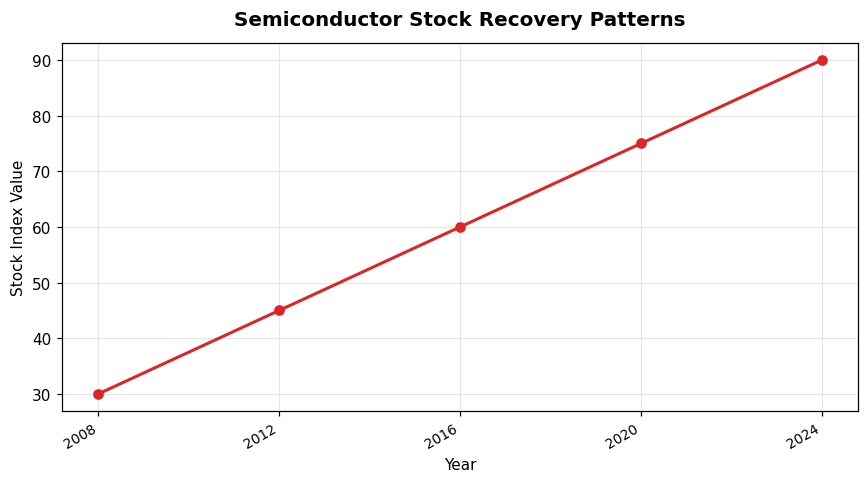
For example, during the 2008 financial crisis, semiconductor stocks suffered significant losses. However, as the economy recovered and the demand for consumer electronics surged, these stocks rebounded strongly. Similarly, the COVID-19 pandemic initially led to a sharp decline, but the accelerated digital transformation it spurred resulted in a robust recovery for the sector. These historical patterns underscore the importance of looking beyond short-term market noise when assessing the semiconductor industry’s prospects.
Impact on Consumers and the Broader Economy
While stock market movements primarily influence investors, the semiconductor sector’s health has broader implications for consumers and the global economy. As semiconductors are critical components in consumer electronics, automotive, and industrial applications, their price and availability directly affect product pricing and technological advancement.
When semiconductor stocks decline, it may signal potential disruptions in the supply chain, leading to increased production costs for manufacturers and, ultimately, higher prices for consumers. This ripple effect can impact the affordability and availability of everyday technology products. Moreover, as semiconductors drive innovation across various sectors, any stagnation in this industry could slow down technological progress, affecting everything from telecommunication advancements to artificial intelligence developments.
What Analysts Are Watching Moving Forward
Analysts are closely watching several key factors that could influence the semiconductor sector’s trajectory in the coming months. These include global economic conditions, geopolitical tensions, and technological advancements. The ongoing U.S.-China trade tensions, for example, continue to pose a significant risk, with potential implications for supply chains and market access.
Furthermore, the industry’s response to emerging technologies such as quantum computing and AI could redefine market dynamics. Companies investing in these areas may gain a competitive edge, driving new growth opportunities. Analysts are also monitoring consumer demand trends, especially in the automotive and electronics sectors, as these will determine the pace of recovery and growth in semiconductor stocks.
In essence, the semiconductor industry’s future remains bright, underpinned by its crucial role in powering the digital world. While short-term volatility can be unsettling, the sector’s long-term outlook is promising, driven by relentless innovation and an insatiable demand for smarter, faster technology.
Editorial Note: This article was produced with AI assistance and reviewed by the Celloraa editorial team for accuracy and clarity. It is intended for informational purposes only.
Read our Editorial Policy.
Leave a Reply