
Photo by Nothing Ahead on Pexels
The U.S. Department of Justice’s approval of the Paramount-Warner Bros. Discovery (WBD) merger marks a pivotal shift in a deal many insiders believed might face significant regulatory hurdles. This green light for the $110 billion consolidation defies expectations and reflects the evolving regulatory stance on media conglomerations. While still potentially vulnerable to legal challenges from state attorneys general, the DOJ’s decision sets a new precedent for how large-scale mergers might navigate the current competitive environment.
Surprising Approval: A Shift in Regulatory Stance
Until recently, the media and entertainment sectors were bracing for a protracted battle with the DOJ, anticipating that the merger might be stalled or even blocked due to antitrust concerns. Historically, such mega-deals have drawn intense scrutiny over fears of reduced competition and consumer choice. However, the DOJ’s decision suggests a nuanced understanding of the rapidly transforming industry landscape, where streaming wars and digital content proliferation demand a recalibration of traditional antitrust perspectives.
What makes this approval particularly striking is the DOJ’s apparent recognition of the competitive pressures facing traditional media giants. With streaming platforms like Netflix and Disney+ dominating the market, legacy companies such as Paramount and WBD argue that consolidation is necessary to survive and thrive. By approving this merger, the DOJ acknowledges the need for legacy players to adapt and compete effectively against tech-savvy newcomers.
Ripple Effects: Beyond the Immediate Merger
The approval of the Paramount-WBD merger is likely to have profound second-order effects that extend beyond the immediate parties involved. As these media giants unite, their combined resources and content libraries could set new standards for industry competition, potentially prompting rivals to reconsider their strategies. This merger may accelerate further consolidations as competitors seek to bolster their positions in an increasingly challenging market.
Moreover, this development could influence how media consumption and production evolve. The merger may lead to an intensification of content production, with the new entity leveraging its expanded assets to create more diverse and original programming. This could benefit consumers by providing a broader range of viewing options, although it also raises questions about the potential homogenization of content and the marginalization of smaller, independent creators.
Winners and Losers: Stakeholders at a Crossroads
In the wake of the merger approval, stakeholders across the board are assessing their positions. Paramount and WBD shareholders stand to gain significantly, as the merger promises synergies that could enhance profitability and market share. The new entity will likely leverage its combined clout to negotiate better deals with advertisers and distribution partners, potentially boosting revenue streams.
However, the deal presents challenges for smaller media companies and independent content creators who may struggle to compete against a behemoth with vast resources and market influence. Additionally, employees within the merging companies face uncertainty as operational redundancies are addressed, potentially leading to job cuts despite assurances of growth and expansion.
Industry Signals: Redefining Media Conglomerates
This merger serves as a bellwether for the media industry, signaling an era where size and scale are increasingly seen as essential for survival. As traditional media entities grapple with the shift towards digital consumption, the Paramount-WBD merger underscores the necessity for adaptability and innovation. The industry may witness a wave of strategic partnerships and alliances aimed at consolidating resources to compete with the formidable presence of tech-driven streaming platforms.
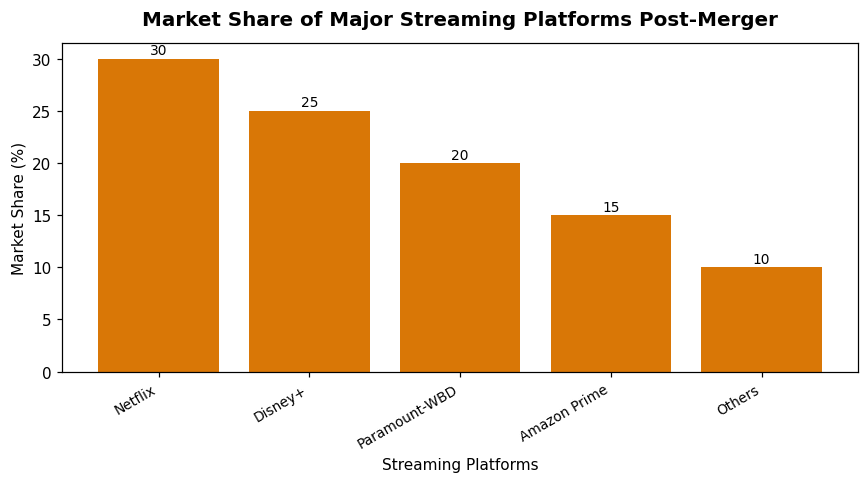
The merger’s approval also suggests that regulators are recalibrating their approach to antitrust concerns, perhaps prioritizing consumer benefits over traditional market concentration metrics. This could pave the way for future large-scale mergers in the media sector, provided they demonstrate potential consumer advantages and competitive balance.
Forward-Looking Analysis: Navigating a New Media Ecosystem
The Paramount-WBD merger marks a transformative moment in the media industry, with implications that will reverberate through the market. As the newly merged entity charts its course, it will need to navigate a delicate balance between leveraging its expanded capabilities and maintaining consumer trust. The deal’s long-term success will hinge on its ability to innovate and deliver value to audiences while addressing the regulatory and competitive challenges that lie ahead.
As the media landscape continues to evolve, industry players must remain vigilant and responsive to changing consumer preferences and technological advancements. The Paramount-WBD merger is a harbinger of further shifts in the sector, marking the beginning of a new chapter defined by collaboration, competition, and creativity.
Editorial Note: This article was produced with AI assistance and reviewed by the Celloraa editorial team for accuracy and clarity. It is intended for informational purposes only.
Read our Editorial Policy.
Leave a Reply