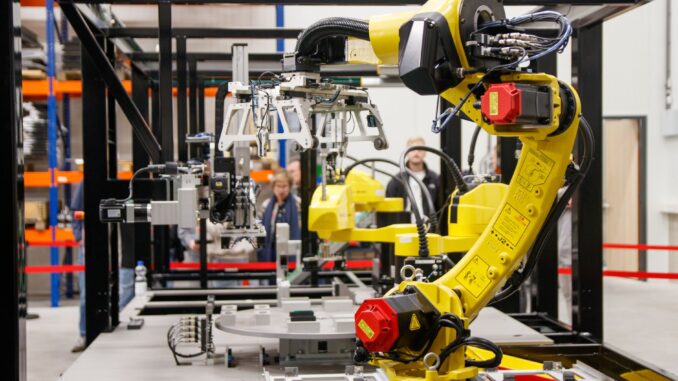
Photo by Freek Wolsink on Pexels
Rivian’s New Robotics Venture: A Bold Divergence
In the rapidly evolving landscape of humanoid robotics, Rivian’s CEO RJ Scaringe is charting a path distinct from the one popularized by Tesla’s Elon Musk. Scaringe’s new company, Mind Robotics, launched late last year, has already secured over $1 billion in funding. This substantial financial backing underscores the serious intent behind Mind Robotics’ ambitions. However, the core of Scaringe’s strategy lies not in mimicking Musk’s flashy demonstrations of robot prototypes but in a more nuanced, perhaps understated, approach to integrating robotics within existing industries.
While Musk has captivated audiences with ambitious presentations and promises of a near-future populated by humanoid robots, Scaringe’s venture is quietly building the foundational technologies that might redefine how robotics are applied in practical settings. The central tension here is whether Scaringe’s methodical approach will prove more effective than Musk’s high-profile, high-risk gambles. This divergence is emblematic of broader strategic differences within the tech industry, where marketing bravado often clashes with engineering pragmatism.
A Tale of Two Strategies: Humanoid Robotics in Focus
Elon Musk’s strategy with Tesla’s robotics initiative has been characterized by an aggressive timeline and bold claims, aiming to capture public imagination and investor dollars. The spectacle of humanoid robots taking the stage at Tesla events serves to highlight the company’s vision of a future where robots handle mundane tasks, allowing humans to focus on more creative endeavors. However, this approach has also been criticized for overpromising and underdelivering, as the practical deployment of such technology remains a significant challenge.
In contrast, RJ Scaringe’s Mind Robotics is focusing on incremental advancements and strategic partnerships with industries that can immediately benefit from automation. By targeting specific sectors where robotics can enhance productivity and efficiency, Scaringe aims to embed his technology within the fabric of society gradually. This pragmatic approach prioritizes real-world applications over potentially speculative leaps, potentially offering a steadier return on investment.
Market Dynamics: Winners and Losers in the Robotics Race
The stakes in the robotics arena are high, with both risks and rewards looming large. For Mind Robotics, the immediate winners could be industries such as manufacturing, logistics, and healthcare, where automation can drive down costs and improve operational efficiency. Companies within these sectors stand to benefit from Scaringe’s focus on practical, applicable technologies.
Conversely, those who might lose out are competitors banking heavily on the allure of advanced robotics without a clear path to functional deployment. If Mind Robotics’ strategy pays off, it could set a precedent for how robotics companies approach commercialization, potentially diminishing the viability of ventures that emphasize spectacle over substance.
What This Means for the Future of Robotics
The contrasting strategies of Mind Robotics and Tesla underscore a critical question facing the robotics sector: Is it better to aim for transformative leaps or to pursue steady, incremental progress? The answer could shape not only the future of these companies but also the robotics field as a whole. Scaringe’s approach might signal a shift toward valuing sustainable, scalable solutions over high-risk ventures.
This divergence also reflects broader trends in technology development, where the balance between innovation and practicality is continuously negotiated. As Mind Robotics develops, its success or failure could influence investment patterns, regulatory considerations, and the balance of power among tech giants.
An Informed Perspective on Robotics Evolution
The more significant development here is not merely in the funding or the strategic choices of Scaringe and Musk but in what these choices reveal about the evolving landscape of the tech industry. The robotics sector is at a crossroads, where the allure of rapid, revolutionary change competes with the necessity for reliable, real-world solutions. RJ Scaringe’s methodical approach might well align with the growing demand for technologies that solve tangible problems rather than pushing the boundaries of possibility without immediate application.
Looking ahead, the success of Mind Robotics could validate a more cautious, industry-focused path in robotics development. This might encourage other companies to re-evaluate their strategies, potentially leading to a more integrated and practical application of robotics in everyday life. Whether Scaringe’s approach will ultimately yield the dividends that investors hope for remains an open question, but it undeniably adds a compelling new chapter to the narrative of technological progress.
Editorial Note: This article was produced with AI assistance and reviewed by the Celloraa editorial team for accuracy and clarity. It is intended for informational purposes only.
Read our Editorial Policy.
Leave a Reply